 Sand Aggregate IndustryComprehensive Service ProviderSand Aggregate IndustryComprehensive Service Provider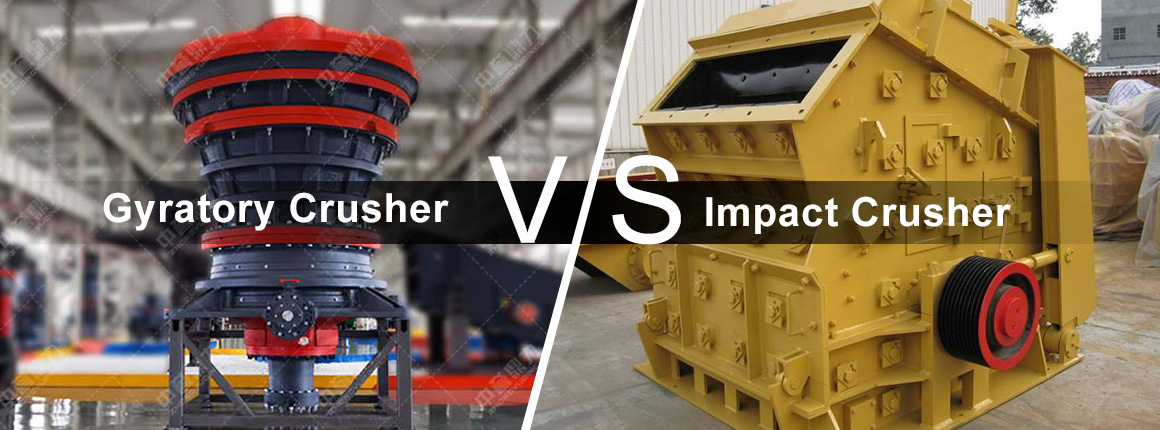
In the crushing industry, gyratory crushers and impact crushers play crucial roles in material processing. Despite their similar functions, they differ significantly in structure, working principles, and applications. This guide provides a detailed comparison of gyratory crushers and impact crushers, along with selection advice to help you make an informed decision based on your specific needs.
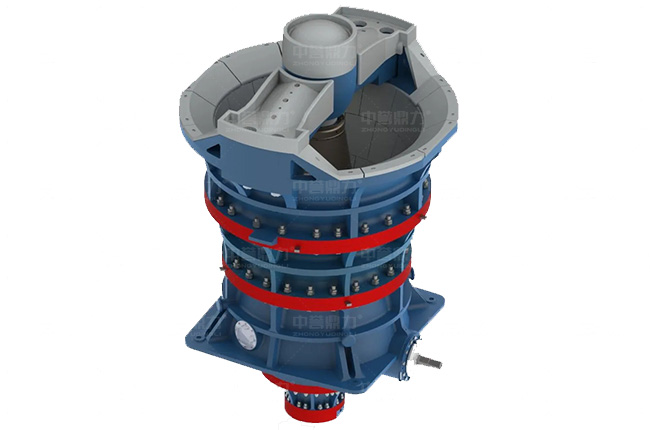
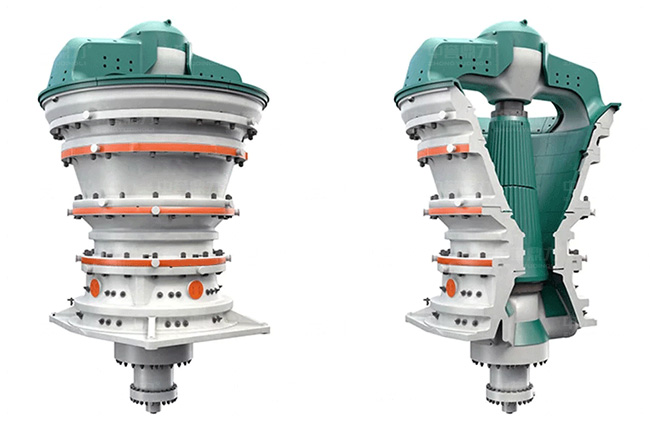
Gyratory crushers primarily use the compression between a rotating cone and a fixed concave to break materials. Their working principle is similar to that of jaw crushers, but their structure is more complex.
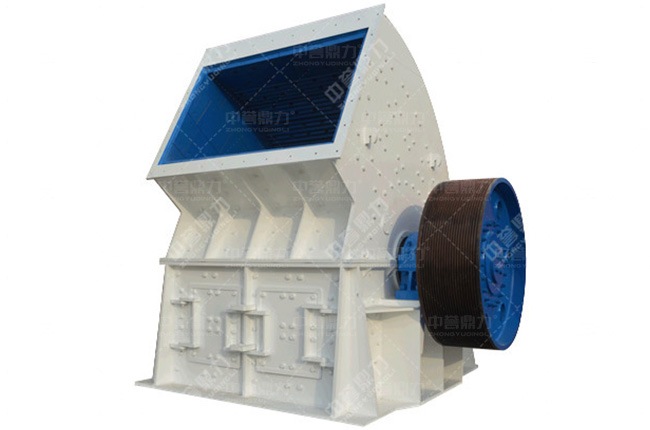
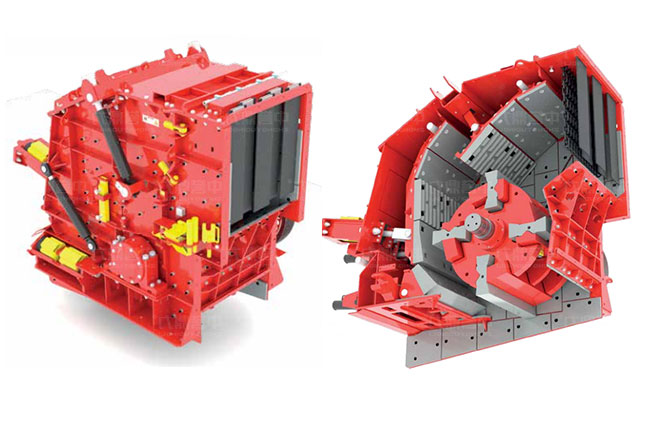
Impact crushers use the impact force between a high-speed rotating rotor and fixed impact plates to crush materials. They achieve crushing through the collisions between materials and between materials and the impact plates.
High Crushing Ratio: Suitable for medium to high-hardness materials.
Good Product Granularity: Produces uniform particle sizes during crushing.
Strong Adaptability: Capable of handling materials with varying hardness and moisture content.
High Stability: Well-designed crushing chamber for stable operation.
Adjustable Crushing Granularity: Particle size can be controlled by adjusting the position of the impact plates.
Strong Adaptability: Suitable for medium-hardness materials.
Lower Energy Consumption: Generally more energy-efficient compared to other crushers.
Easy Maintenance: Simple structure makes maintenance and part replacement easier.
Main Components: Frame, eccentric shaft, mantle, concave, and hydraulic system.
Eccentric Shaft: Drives the mantle in a circular motion around the fixed concave, creating a compressive crushing action.
Mantle and Concave: Primary crushing surfaces that experience wear. The mantle rotates around the stationary concave to break the material.
Main Components: Frame, transmission mechanism, impact plate, and rotor.
Impact Plate: Suspended inside the crushing chamber to withstand material impacts.
Rotor and Liner Plates: Key wear parts; the rotor is typically made of robust cast steel.
Crushing Action: Material is crushed through compression between the rotating mantle and the stationary concave. The material is continually squeezed and broken until it passes through the adjustable discharge opening.
Material Handling: Suitable for various hardness materials, particularly hard and abrasive ores.
Crushing Action: Material is crushed by the impact of hammers on the high-speed rotating rotor and the repeated impacts between the material and the impact plate as well as between the materials themselves.
Working Method: Utilizes both impact and counteraction, making it suitable for processing larger materials and applications requiring good particle shape.
Suitable Materials: Ideal for processing high-hardness, abrasive materials such as granite, basalt, and quartzite.
Output Particle Size: Typically ranges from 140mm to 250mm, adjustable according to requirements. Suitable for construction aggregates and mineral processing.
Suitable Materials: Suitable for softer materials like limestone, dolomite, and sandstone with a compressive strength not exceeding 350MPa.
Output Particle Size: Generally ranges from 5-40mm, making it suitable for highway construction, water conservancy projects, and building stone processing.
When choosing between a gyratory crusher and an impact crusher, consider the following factors:
Gyratory Crusher: Ideal for hard and abrasive materials like granite, basalt, and quartzite. Offers high crushing ratios and uniform particle sizes, making it suitable for high-hardness materials.
Impact Crusher: Best for medium-hard materials such as limestone, dolomite, and construction debris. Provides flexible particle size control for applications with high granularity requirements.
Gyratory Crusher: Suitable for large-scale production and heavy mining operations. Capable of handling large materials and high load operations. Performs well in high-efficiency and high-capacity settings.
Impact Crusher: Suitable for applications requiring high efficiency and low energy consumption. Effective for medium-hard materials where high production rates are not the primary concern.
Gyratory Crusher: More complex in structure, requiring more intricate maintenance and operation. Regular inspection of wear parts and hydraulic system maintenance is necessary. Best suited for environments with technical support.
Impact Crusher: Simpler in design, making it easier to maintain. Daily operations and maintenance are less complex, suitable for environments requiring frequent operation and upkeep.
Gyratory Crusher: Higher initial investment but offers better durability and efficiency in handling hard materials. Ideal for applications with a higher budget and needs for high-load, high-efficiency operations.
Impact Crusher: Lower initial investment and operational costs. Suitable for situations with budget constraints, especially for processing softer materials or requiring higher flexibility.
Both gyratory crushers and impact crushers have their advantages and specific applications in the crushing industry. Choosing the right crusher should be based on the particular application scenario and requirements. If you are dealing with hard materials or need precise control over output particle size, a gyratory crusher is likely the better choice. Conversely, if you require good particle shape or are processing softer materials, an impact crusher would be a suitable option.
Are you still hesitating about how to choose a crushing equipment? Click the button below to learn more details
Chat Online
Free consultation on related issues.