 Sand Aggregate IndustryComprehensive Service ProviderSand Aggregate IndustryComprehensive Service Provider
Jaw and hammer crushers are widely used in the mining, metallurgy, construction, chemical and sand aggregate industries. Due to their different working principles and structural characteristics, they operate at different stages of material treatment and meet different industrial standards.
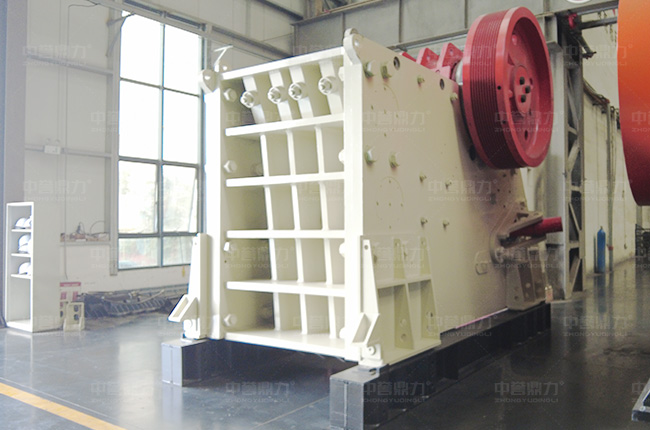
Jaw Crusher: As a member of the compression crushers, the jaw crusher breaks materials through the squeezing and bending action between the moving jaw plate and the fixed jaw plate. The material is subjected to compression, splitting, and bending forces between the two jaw plates, resulting in its crushing.
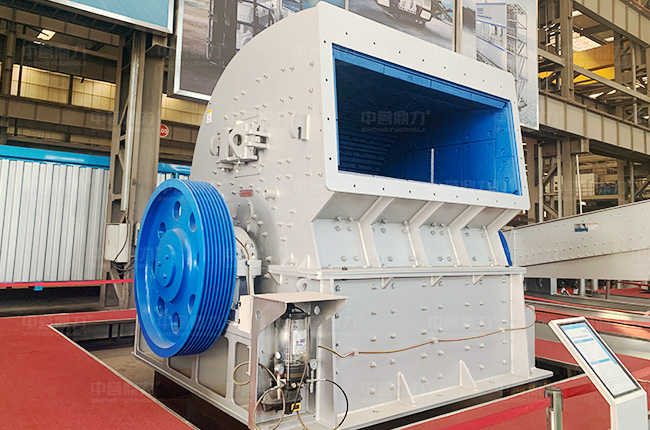
Hammer Crusher: A hammer crusher falls under the category of impact crushers. An electric motor drives the rotor, which is equipped with hammers, to rotate at high speed within the crushing chamber. Once the material enters, it is struck by the rapidly rotating hammers and is subjected to impact, shearing, and grinding forces, thus achieving the crushing effect.
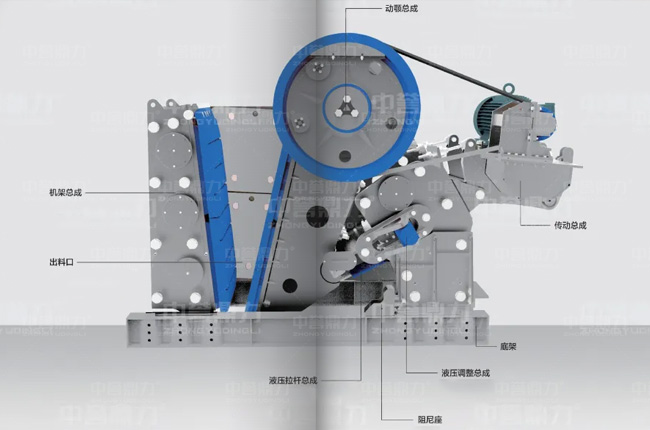
Movable Jaw Plate: Connected to the eccentric shaft, it performs a reciprocating swing motion driven by the rotation of the eccentric shaft.
Fixed Jaw Plate: Mounted on the frame, it works in conjunction with the movable jaw plate.
Toggle Plate: Transmits the motion of the movable jaw plate and acts as a safety device during overload conditions.
Eccentric Shaft: Connects the movable jaw plate and toggle plate, driven by the motor.
Spring: Maintains the stability of the equipment and provides cushioning when there are foreign objects in the crushing chamber.
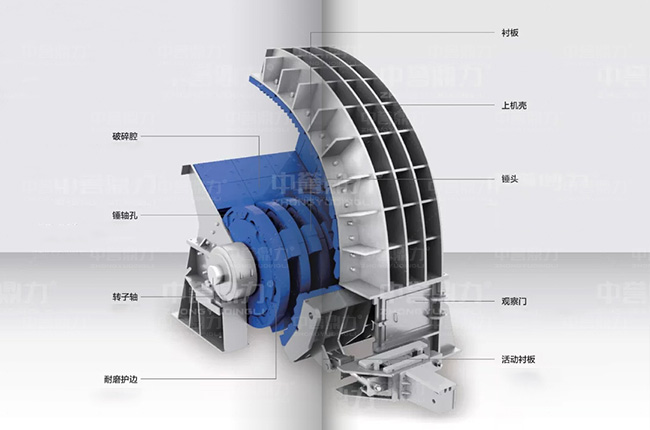
Hammer Heads: Directly contact with the material, breaking it through the impact force generated by high-speed rotation.
Liner Plates: Protect the interior of the crusher from wear and absorb the impact of the hammer heads and material.
Rotor Shaft: Connects the motor and rotor, transmitting power to the rotor for high-speed rotation.
Adjustable Liners: Adjusted according to wear to maintain the optimal working gap in the crushing chamber.
Wear Resistant Skirting: Protects the hammer disc from wear, enhancing the durability of the equipment and reducing operating costs.
| JAW | Hammer | |
| Compressive strength of materials | ≤350 MPa | ≤200 MPa |
| Applicable Materials | Suitable for medium hardness and brittle materials like limestone, coal, salt, gypsum, bricks, and tiles. | Suitable for medium hardness and brittle materials like limestone, coal, salt, gypsum, bricks, and tiles. |
| Crushing stage | primary crushing | fine and medium crushing. |
| Crushing Ratio | between 4-6, can reach up to 8. | between 10-25, can reach up to 50. |
| Feed size | ≤1525mm | ≤1200mm |
| Discharge Size | 60~350mm | ≤70mm |
| grain shape | A high proportion of needle-like and flaky particles | Most of the cube-shaped particles, Much less needle flake particles |
| capacity | 155-1500T/H | 150-1500T/H (DL heavy hammer crusher could reach 6000TPH) |
Jaw crusher: Requires secondary crushing equipment (e.g., impact crusher or cone crusher), resulting in higher total investment.
Hammer crusher: Completes crushing in one step, no need for secondary crushing equipment, resulting in lower total investment.
Jaw crusher: Relatively simple maintenance, mainly involving lubrication and inspection of the movable jaw, eccentric shaft, and bearings, with long replacement cycles for wear parts.
Hammer crusher: Frequent maintenance required, with quick wear of hammerheads and Liner Plates necessitating regular replacement.
Jaw crusher: Wear parts include jaw plates and toggle plates, with relatively higher prices but longer replacement cycles. Wear parts cost increases with multiple units.
Hammer crusher:Wear parts include hammerheads, grate bars, and liners, with lower prices but higher replacement frequency.
Jaw Crusher: Suitable for high-output and large-scale production, capable of processing large quantities of material. Despite higher initial investment and maintenance costs, its high capacity and durable wear parts meet the needs of high-output requirements, making it suitable for companies with long-term investment plans. Maintenance costs are relatively low, with long replacement cycles for wear parts, resulting in lower overall usage costs.
Hammer Crusher: Completes crushing in one step, eliminating the need for secondary crushing equipment, which simplifies the production process and is ideal for those looking to streamline their production line and reduce investment. It is also suitable for medium-output production lines. Although its wear parts require more frequent replacement, the maintenance and management costs for a single unit are relatively low.
Output Requirement: 1000 tons per hour
Material: Granite
Selection: Jaw crusher for primary crushing, followed by a cone crusher for secondary crushing to meet high output and strict particle size requirements.
Output Requirement: 300 tons per hour
Material: Limestone
Selection: Hammer crusher might be more suitable as it can complete both coarse and medium crushing in one step, reducing the number of equipment, simplifying the process, and lowering costs.
Jaw Crusher: Generally more suitable for high-output needs and handling high-hardness materials.
Hammer Crusher: Preferred when the output requirement is lower, and the material hardness is moderate or low due to its ability to simplify the process and provide good particle shape.
Factors to Consider: Besides output and material hardness, other factors such as particle shape requirements, cost-effectiveness, ease of maintenance, energy consumption, and environmental requirements should also be considered when selecting crushers. In some cases, a combination of different types of crushers might be necessary to achieve the best production results and economic benefits.
Jaw Crusher: Generally more suitable for high-output requirements and handling high-hardness materials.
Hammer Crusher: Preferred when the output requirement is lower, and the material hardness is moderate or low due to its ability to simplify the process and provide good particle shape.
Factors to Consider: When selecting a crusher, besides output and material hardness, other factors such as particle shape requirements, cost-effectiveness, ease of maintenance, energy consumption, and environmental requirements should also be considered. In some cases, a combination of different types of crushers may be necessary to achieve the best production results and economic benefits.
Are you still hesitating about how to choose a crushing equipment? Click the button below to learn more details
Chat Online
Free consultation on related issues.