 Sand Aggregate IndustryComprehensive Service ProviderSand Aggregate IndustryComprehensive Service Provider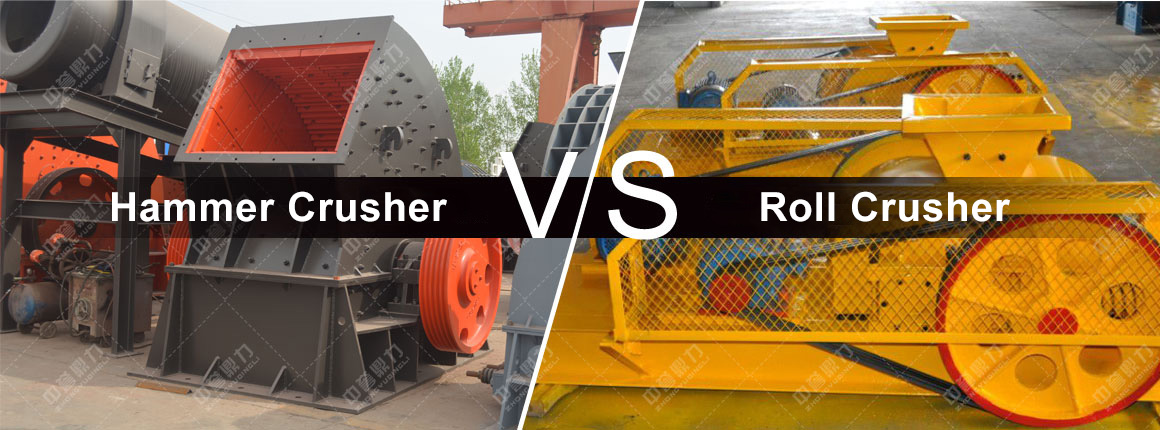
Explore the differences between hammer crushers and roll crushers with a detailed comparison of their working principles, applications, advantages, and more. Discover which crusher suits your needs better.
Crushing technology is essential in industries such as mining, construction, and recycling. Two commonly used machines in these sectors are hammer crushers and roll crushers. Although they serve similar purposes—reducing material size—their methods, efficiency, and ideal applications differ significantly. This article provides a detailed, side-by-side comparison of hammer crushers and roll crushers, helping you determine which is best suited for your specific needs.
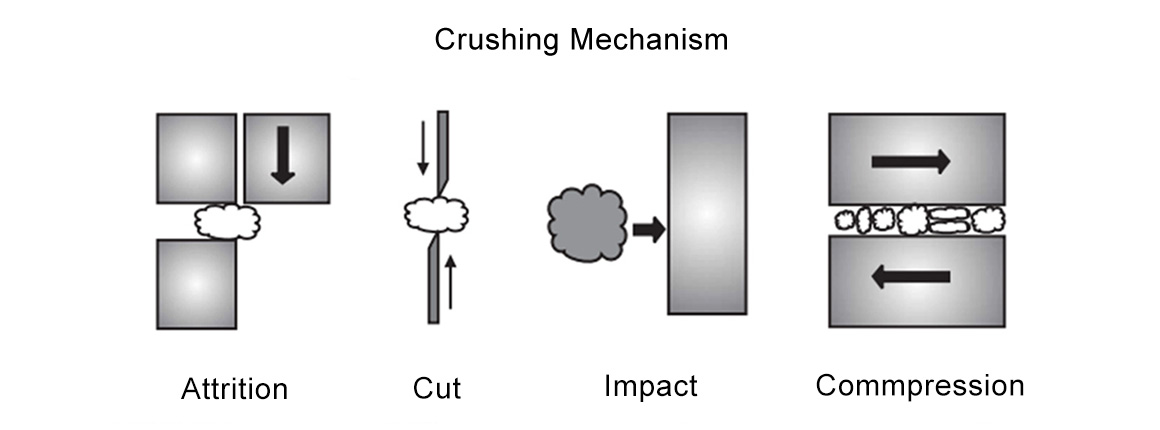
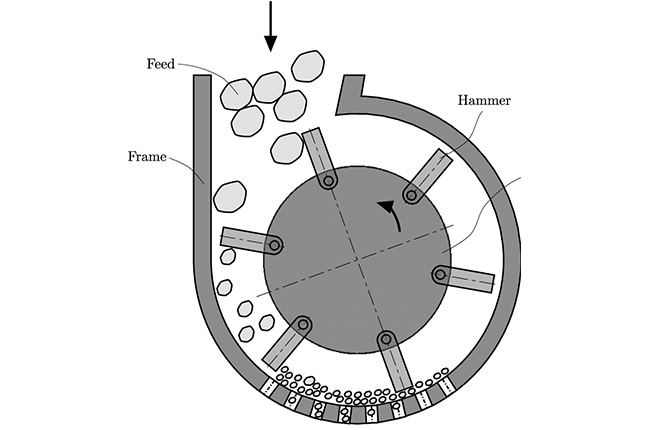
The hammer crusher operates on the principle of impact.
Inside the machine, a rotor fitted with hammers spins at high speed. As the material enters the crusher, it is struck by the hammers, breaking it into smaller pieces.
The crushed material then passes through a grate with spaces that allow only pieces of a certain size to exit the crusher.
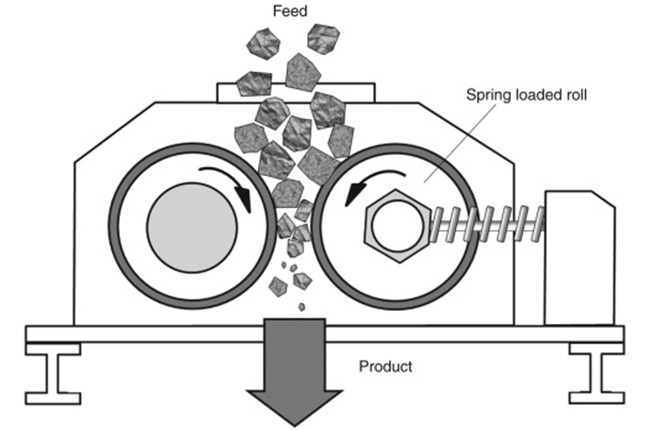
In contrast, roll crushers function through compression.
Two rollers rotate in opposite directions, pulling the material between them. The material is crushed as it is squeezed between the rotating rollers.
The size of the final product is determined by the gap between the rollers, which can be adjusted to suit different requirements.
Hammer crushers excel in processing brittle materials such as limestone, coal, and gypsum.
These materials break easily under the impact of the hammers, making hammer crushers particularly effective in industries like cement and mining where such materials are common.
Hammer crushers are particularly effective in crushing brittle, blocky materials, where a controlled and uniform particle size is crucial.
Roll crushers, on the other hand, are better suited for medium-hard to hard materials such as rock, ore, cement clinker, and refractories. Their design allows them to handle materials with a crushing strength of up to 160 MPa.
The compression mechanism is more efficient in breaking down these tougher substances, ensuring a consistent product size that is crucial in applications like mineral processing and construction.
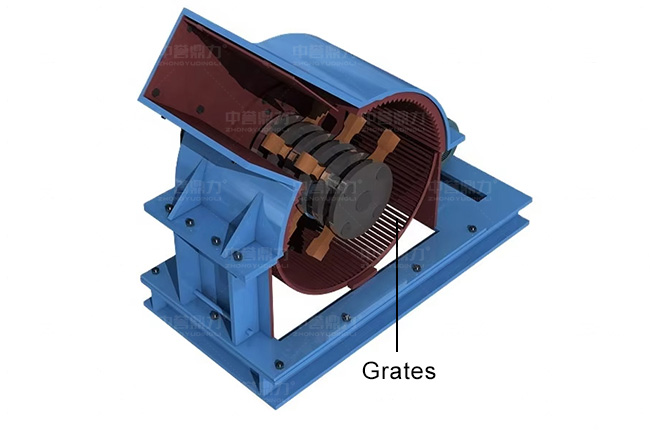
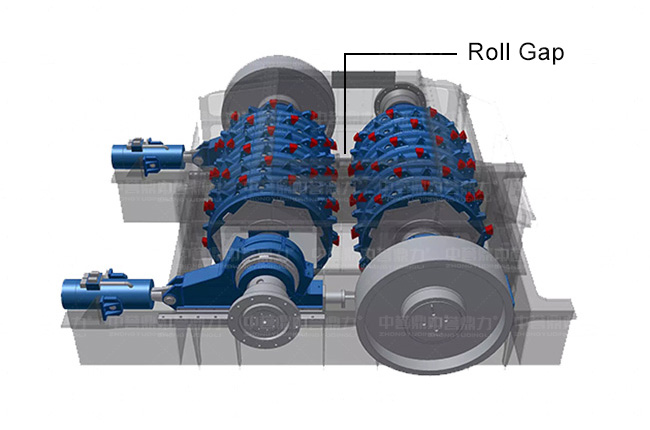
In hammer crushers, the final product size is controlled by the grate located at the bottom of the crushing chamber.
The material that is smaller than the openings in the grate exits the crusher, while larger pieces are retained for further crushing.
This setup allows for some variability in product size but may result in a less uniform output compared to roll crushers.
Roll crushers offer more precise control over product size.
The gap between the two rollers can be adjusted to regulate the final product size.
This adjustability makes roll crushers ideal for applications requiring a specific size range, as it ensures a more uniform output.
Hammer crushers are known for their high production capacity, making them suitable for large-scale operations. The high-speed impact mechanism allows for the processing of large volumes of material in a short time, which is ideal in industries that require high throughput.
Roll crushers, while not as fast as hammer crushers, offer the advantage of precision. They produce a more consistent and predictable output, which is crucial in applications where the size and shape of the product are critical. However, their production capacity is generally lower, making them more suitable for operations where quality takes precedence over quantity.
The fast-moving hammers in hammer crushers are subject to significant wear and tear, especially when processing abrasive materials. This leads to more frequent maintenance and higher operational costs over time, as the hammers need regular replacement to maintain efficiency.
Roll crushers, by contrast, experience less wear due to their compression-based mechanism. The rollers are more durable and require less frequent replacement, resulting in lower maintenance costs. This makes roll crushers more cost-effective in the long run, especially in operations where maintenance downtime is critical.
The high-speed operation of hammer crushers requires a considerable amount of energy. The energy is needed not only to spin the rotor but also to overcome the resistance of the material being crushed. As a result, hammer crushers tend to have higher energy consumption, which can be a disadvantage in energy-conscious operations.
Roll crushers are generally more energy-efficient. Their lower speed of operation reduces the overall energy demand, making them a more economical choice in situations where energy costs are a significant concern. The energy efficiency of roll crushers also makes them environmentally friendly, as they reduce the carbon footprint of the crushing process.
Hammer crushers generally have a lower initial cost compared to roll crushers. The simplicity of their design and operation contributes to a lower price point, making them an attractive option for businesses with limited capital or those looking to minimize upfront expenses.
Despite the higher initial cost, roll crushers can be more cost-effective over time. Their lower maintenance requirements, durability, and energy efficiency lead to long-term savings, particularly in operations where these factors are critical to profitability.
When deciding between a hammer crusher and a roll crusher, consider the following factors:
Material Characteristics:Hammer crushers are better for brittle materials, while roll crushers are suited for harder, more abrasive substances.
Product Size Requirements:If precise control over product size is essential, roll crushers are the better choice.
Production Needs: For high production capacity, hammer crushers are more suitable; for operations prioritizing precision, choose roll crushers.
Maintenance and Operational Costs:Consider the long-term costs associated with maintenance and energy consumption when making your decision.
Roll crushers offer more precise control over product size, making them better for producing uniform outputs.
Hammer crushers are less effective on very hard materials due to their impact-based mechanism, which may result in higher wear and tear.
Roll crushers require less maintenance compared to hammer crushers due to the durability of their rollers.
Yes, hammer crushers are versatile and can handle a variety of materials, including soft and brittle ones.
Roll crushers are generally more energy-efficient due to their lower operational speed and compression-based mechanism.
Hammer crushers have a lower initial cost but higher long-term maintenance expenses, while roll crushers are more expensive upfront but offer long-term savings.
Are you still hesitating about how to choose a crushing equipment? Click the button below to learn more details
Chat Online
Free consultation on related issues.