 Sand Aggregate IndustryComprehensive Service ProviderSand Aggregate IndustryComprehensive Service Provider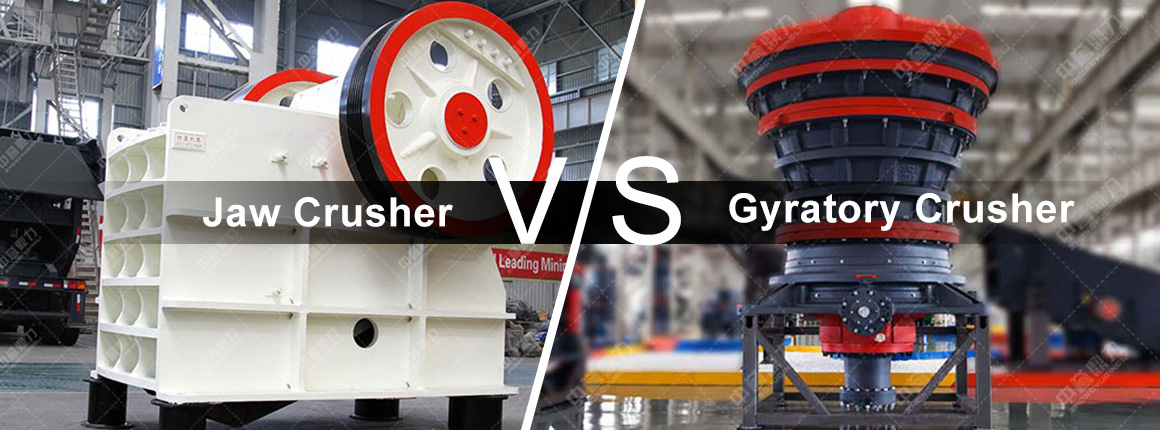
In the world of heavy machinery, crushers play a crucial role in breaking down large rocks into manageable pieces for use in various construction and industrial applications. Among the most commonly used crushers are the jaw crusher and the gyratory crusher. Both serve the same purpose—crushing stones, ores, and other materials—but they do so in different ways, each with its own set of advantages and disadvantages. Understanding these differences is essential for anyone involved in mining, quarrying, or the construction industry, as choosing the right crusher can significantly impact productivity and operational efficiency.
Both jaw crushers and gyratory crushers serve the same purpose: to reduce large, solid material into smaller, manageable pieces. However, the method by which they achieve this differs greatly.
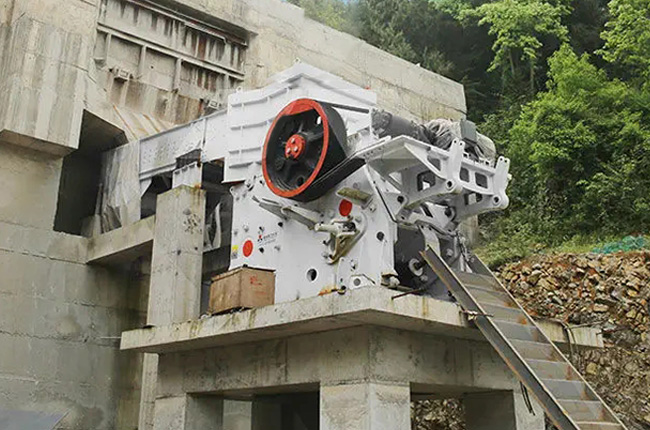
The jaw crusher consists of two plates, one fixed and the other moving. The moving plate compresses material against the fixed plate, breaking it into smaller pieces.
The simplicity of this design is one of the jaw crusher's primary advantages, making it easy to operate and maintain.
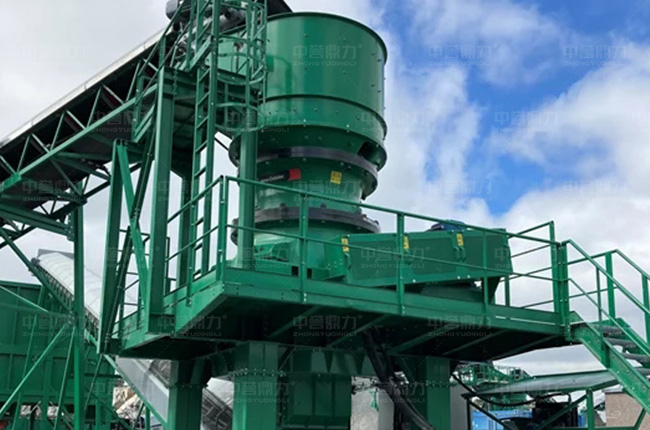
The gyratory crusher, on the other hand, has a more complex design. It consists of a concave surface and a conical head, with the material being crushed between them.
The gyratory crusher's design allows for continuous crushing action, as the material is squeezed and compressed over and over until it breaks apart. This continuous crushing is ideal for high-capacity operations.
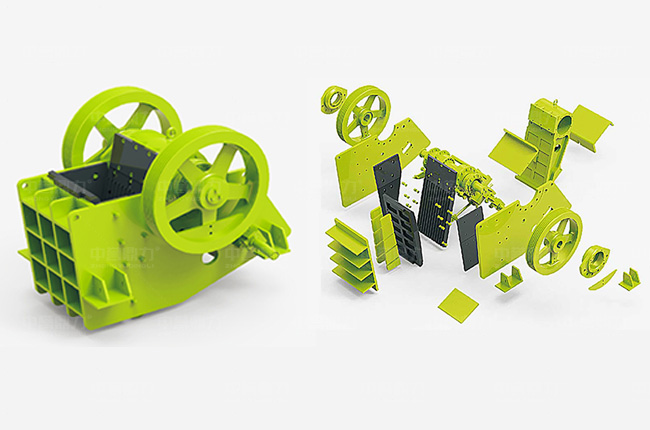
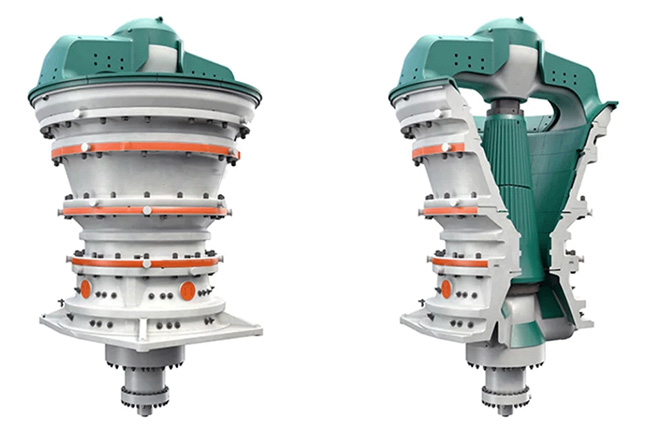
The jaw crusher operates on a simple principle: material is fed into the top of the crusher and is gradually crushed between the two plates.
The material is broken down by compression as the moving plate moves back and forth.
The size of the output is determined by the gap at the bottom of the plates, known as the discharge setting.Gyratory crushers operate on a slightly different principle. Material is fed into the top of the crusher and is squeezed between the mantle and the concave.
The gyratory motion of the mantle ensures that material is crushed continuously as it descends through the crusher, resulting in a more uniform product.
The size of the output in a gyratory crusher is determined by the gap at the bottom, which is adjusted by moving the lower shell or the mantle.
The jaw crusher typically has a lower crushing ratio than the gyratory crusher, meaning it is less efficient at reducing the size of material in a single pass.
However, it is often preferred for its ability to handle a wide variety of materials, including sticky and wet ones.
The output size can also be easily adjusted, allowing for flexibility in final product specifications.
Gyratory crushers have a higher crushing ratio, meaning they can produce a finer product in a single pass.
The continuous crushing action results in a more uniform output, which can be beneficial in certain applications.
However, they are less effective with sticky materials, which can clog the crusher.
Jaw crushers are generally used for smaller projects or in combination with other crushing equipment.
They are capable of producing a moderate amount of material but may not be the best choice for high-capacity operations.
Their production capacity is typically lower than that of gyratory crushers.
Gyratory crushers are built for high-capacity operations.
They can handle large quantities of material and produce a consistent output.
This makes them ideal for use in large mining or quarrying operations where large volumes of material need to be processed quickly and efficiently.
Jaw crushers are versatile and can handle a broad range of material types, including hard, abrasive stones and sticky or moist materials. This adaptability makes them a practical choice for many different applications.
Gyratory crushers are best suited for hard, dry materials and large-scale operations. They are not ideal for processing sticky or moist materials, as these can cause clogging and reduce efficiency.
The discharge size from a jaw crusher is generally larger and more variable. Although it offers flexibility due to its adjustable discharge setting, the resulting material often has a higher content of flaky or elongated particles, which might not be ideal for certain applications.
The output from a gyratory crusher is more uniform with a lower percentage of flaky or elongated particles, typically less than 10%. This consistent output makes gyratory crushers preferable in applications where uniformity and lower needle-like particle content are crucial. However, their inability to handle sticky materials limits their versatility compared to jaw crushers.
Lower initial cost
Simple design and easier maintenance
Versatile, can handle a variety of materials
Adjustable discharge size
Lower crushing ratio
Less uniform product size
Less suitable for high-capacity operations
Higher crushing ratio
Continuous crushing action for a more uniform product
Suitable for high-capacity operations
Durable and long-lasting
Higher initial cost
More complex design and maintenance
Less effective with sticky or moist materials
When deciding between a jaw crusher and a gyratory crusher, it's essential to consider the specific needs of your project. If you need to handle a wide variety of materials, including sticky or moist ones, and your operation doesn't require extremely high capacity, a jaw crusher may be the better choice. Its lower initial cost and easier maintenance make it an attractive option for many operations.
On the other hand, if your project involves processing large quantities of hard, dry material, and you require a consistent, uniform product, a gyratory crusher may be the better option. Despite the higher initial cost and more complex maintenance, the increased efficiency and durability can make it a worthwhile investment for large-scale operations.
Jaw crushers have a simpler design and lower initial cost, making them easier to maintain.
Gyratory crushers, however, offer a higher crushing ratio and continuous crushing action, making them ideal for high-capacity operations.
Jaw crushers are better suited for sticky materials, as gyratory crushers may struggle with clogging.
Yes, gyratory crushers are designed to handle larger feed sizes and are often used as primary crushers in large-scale operations.
Gyratory crushers produce a more uniform output due to their continuous crushing action.
Yes, jaw crushers are generally easier to maintain due to their simpler design and fewer moving parts.
Gyratory crushers are more suitable for high-capacity operations due to their continuous crushing action and higher crushing ratio.
Are you still hesitating about how to choose a crushing equipment? Click the button below to learn more details
Chat Online
Free consultation on related issues.