 Sand Aggregate IndustryComprehensive Service ProviderSand Aggregate IndustryComprehensive Service Provider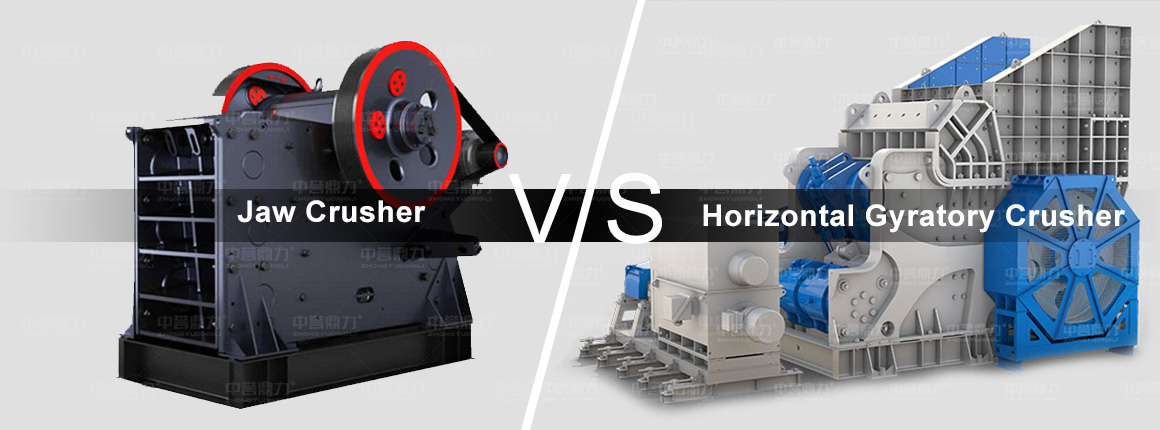
In the mineral processing industry, crushers play a crucial role. Among them, horizontal gyratory crushers and jaw crushers are two common primary crushing devices. This article aims to delve into the main differences between these two crushers, helping readers better understand their working principles, features, and applicable scenarios.
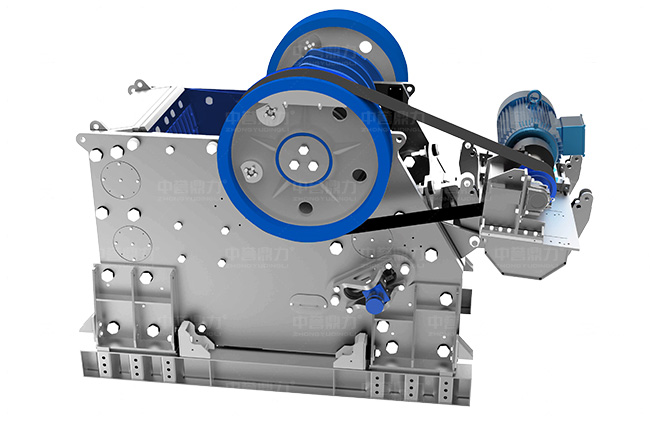
Design: The design of the jaw crusher is relatively simple, primarily consisting of a frame, moving jaw, fixed jaw, and eccentric shaft. This simple design not only reduces the manufacturing cost of the equipment but also makes installation and maintenance more convenient.
Footprint: Jaw crushers have a smaller footprint, making them ideal for small-scale mineral processing plants and quarries with limited space.
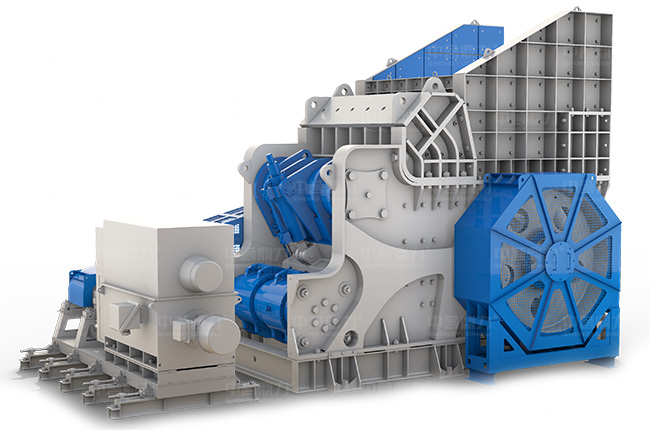
Design: The horizontal gyratory crusher has a more complex structure, comprising a heavy-duty frame, eccentric shaft, crushing cone, and base. Its more precise design allows it to withstand greater crushing forces, suitable for large-scale production.
Cost and Maintenance: Due to its complex structure, the manufacturing and installation costs of the horizontal gyratory crusher are higher, and maintenance is relatively complicated, requiring specialized personnel.
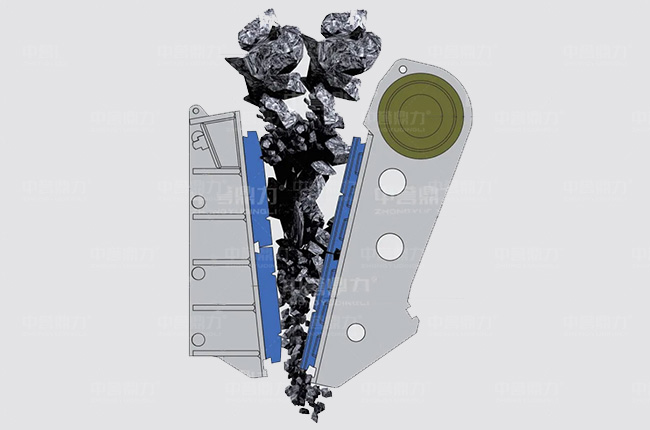
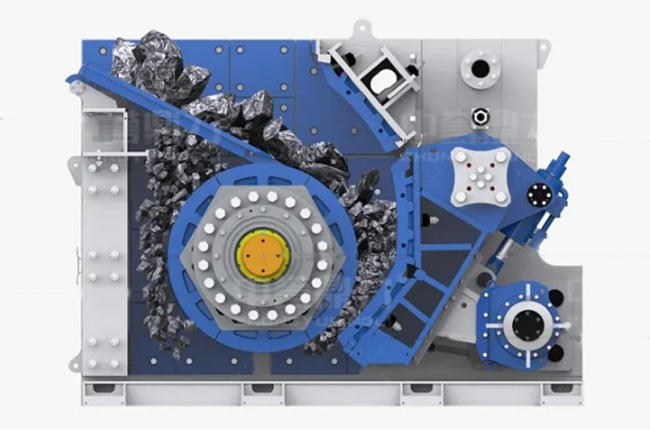
Principle: The jaw crusher works by compressing material between the moving jaw and the fixed jaw. As the moving jaw moves up and down, the angle between the elbow plate and the moving jaw changes, leading to the crushing and discharge of the material.
Performance: The jaw crusher operates intermittently, making it effective for handling materials with higher moisture content and reducing clogging issues.
Principle: The horizontal gyratory crusher uses continuous crushing. The crushing cone rotates around a central axis driven by the eccentric shaft, breaking down material into smaller pieces. This continuous crushing method allows it to handle large chunks of material with higher efficiency.
Features: The gyratory crusher is characterized by a large crushing ratio and uniform product particle size, making it suitable for handling hard ores such as iron ore and copper ore.
| Parameter | Jaw Crusher | Horizontal Gyratory Crusher |
| Crushing Ratio | 4-6 | 6-13.5 |
| Feed Size | ≤1250mm | ≤1200mm |
| Discharge Size | 10-300mm | 70-250mm |
| Material Hardness | ≤320MPa | ≤320MPa |
| Processing Capacity | 155-1500t/h | 2500-3500t/h |
Simple Structure: The design is straightforward, with a compact footprint that is easy to install and maintain.
Wide Range of Applications: Capable of crushing various high-hardness materials such as granite, river pebbles, and iron ore.
Easy Operation and Maintenance: Equipped with a wedge block discharge adjustment device for simple and convenient operation.
Low Cost: Relatively low manufacturing and maintenance costs.
Large Feed Size: Can handle large chunks of material, simplifying the production line and reducing the number of crushing stages.
Long Service Life: The crushing rolls reverse during operation, ensuring even wear on the crushing surfaces and reducing the frequency of parts replacement.
Intelligent Control: Features parameter setting, digital real-time display, one-click start/stop, and hydraulic control functions for ease of use.
Stable Operation: The equipment runs very smoothly, with stability high enough to stand a coin upright during operation.
Application: Widely used for primary crushing of medium-hard stone materials such as limestone, granite, marble, basalt, and river gravel. Its adaptability to high moisture content materials reduces clogging.
Suitability: Commonly used in small to medium-sized mineral processing plants and quarries, especially in projects with limited budgets.
Application: Typically used in large-scale mineral processing plants and industries like metallurgy and chemicals, mainly for handling hard, large chunks of material. Its high-efficiency crushing makes it crucial for large-scale production lines.
Suitability: Ideal for high-yield and high-efficiency projects, particularly effective in processing extremely hard ores.
Initial Investment: Lower initial investment due to simple design and manufacturing process. Maintenance costs are also relatively low.
Maintenance: The maintenance is straightforward, with easy replacement of wear parts and minimal downtime.
Initial Investment: Higher initial investment due to complex structure and manufacturing costs. Maintenance costs are also higher.
Maintenance: Requires specialized personnel for maintenance, with longer downtime and higher maintenance costs.
Both jaw crushers and horizontal gyratory crushers have unique advantages. The choice of equipment should be based on specific production needs and budget considerations. Jaw crushers offer simple structure, low cost, and broad applicability, making them suitable for small to medium-sized projects. In contrast, horizontal gyratory crushers provide high-efficiency crushing capabilities and are suitable for large-scale operations and handling high-hardness materials. When selecting equipment, consider factors such as material characteristics, production scale, and investment budget to choose the most appropriate crusher.
Are you still hesitating about how to choose a crushing equipment? Click the button below to learn more details
Chat Online
Free consultation on related issues.