 Sand Aggregate IndustryComprehensive Service ProviderSand Aggregate IndustryComprehensive Service Provider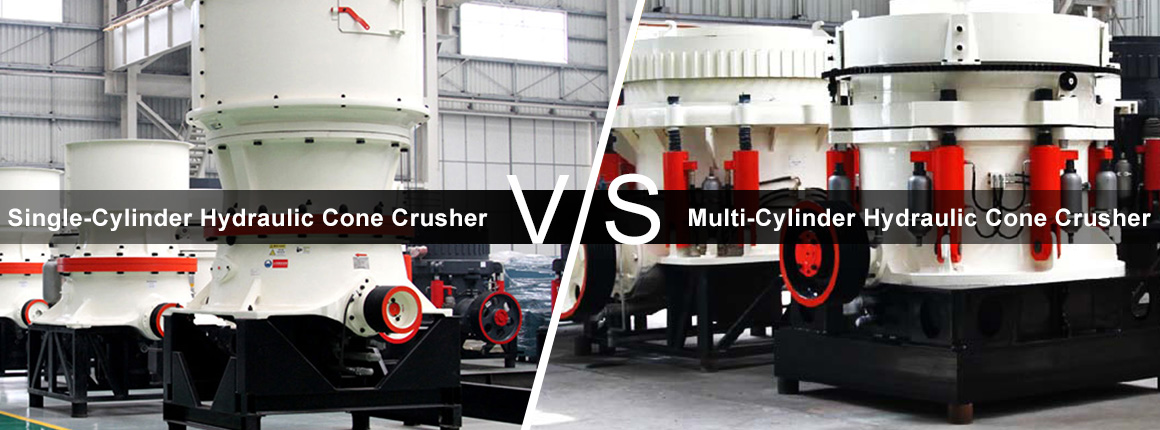
In the world of mining and construction, choosing the right machinery is crucial for maximizing productivity and efficiency. Two common types of hydraulic cone crushers—single-cylinder and multi-cylinder—are often used for secondary and tertiary crushing of various ores and rocks.
This article delves into the differences between these two types of crushers, exploring their structural features, operational characteristics, and application scenarios. Understanding these distinctions will help in selecting the most suitable crusher for your specific needs.
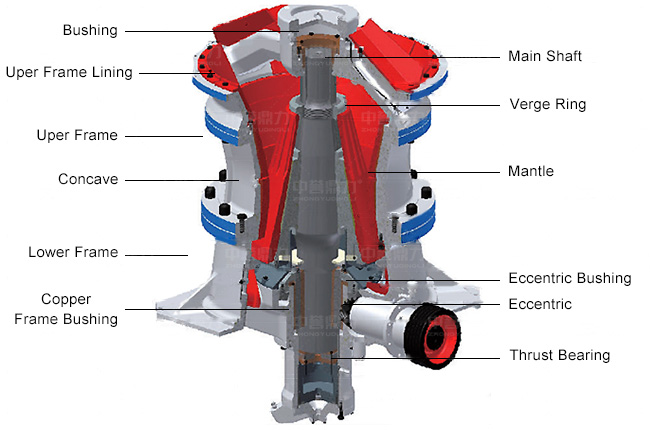
The single-cylinder hydraulic cone crusher is designed with simplicity and efficiency in mind. Its primary components include:
Upper Frame Assembly: This includes the upper frame, concave (mantle), cap, and upper frame protective plates.
Lower Frame Assembly: Comprising the lower frame, lower frame protective plates, lower frame inner liner, eccentric bushing, and seal bucket.
Moving Cone Assembly: Consisting of the main shaft, moving cone body, and mantle.
Transmission Shaft Assembly: This includes the pulley, transmission shaft, bearing, transmission shaft frame, and small bevel gear.
Eccentric Sleeve Assembly: Includes the counterweight ring, eccentric sleeve, large bevel gear, and main shaft bushing.
Hydraulic Cylinder Assembly: Comprising the middle friction disc, lower friction disc, hydraulic cylinder body, cylinder liner, cylinder bottom, and displacement sensor.
Key Characteristics
The main shaft and moving cone body are supported by the base.
The eccentric sleeve drives the main shaft, providing the crushing force.
It offers high reliability in operation with direct adjustment of the discharge port, providing flexibility and a large throughput capacity.
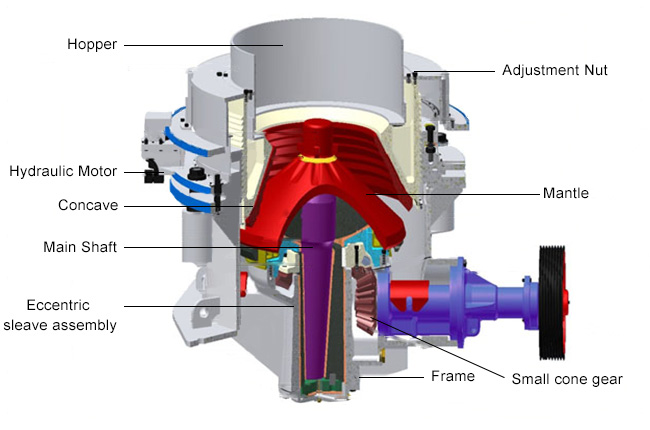
The multi-cylinder hydraulic cone crusher is more complex, with a structure designed to handle tougher crushing tasks. Its main components include
Lower Frame Section: Composed of the frame, main shaft, and guide pin.
Eccentric Sleeve Section: Includes the eccentric sleeve, balancing ring, and large bevel gear.
Transmission Section: Comprising the transmission shaft, small bevel gear, and bushing.
Support Sleeve Section: Consisting of the support sleeve, locking cylinder, and locking nut.
Adjustment Ring Section: This includes the adjustment ring and mantle.
Moving Cone Section: Made up of the body, crushing wall, hammer head, and spherical bearing.
Key Characteristics
The main shaft is directly positioned on the frame, which provides higher load-bearing capacity.
The eccentric sleeve directly drives the moving cone.
It operates at a faster swing speed, producing a finer product with a more uniform particle size.
The discharge port in a single-cylinder cone crusher is adjusted by injecting or draining oil from the main shaft oil cylinder, causing the main shaft to move up or down.
This adjustment can be challenging to lock when crushing hard rocks, leading to potential variations in product size.
In contrast, the multi-cylinder cone crusher uses hydraulic pushers or motors to rotate the adjustment cap, driving the adjustment ring within the support sleeve.
This method allows for more precise and easier adjustment of the discharge port during operation, making it easier to lock, even when processing hard materials.
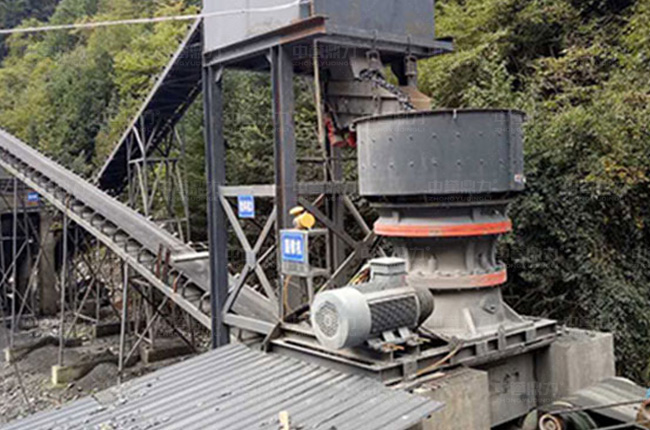
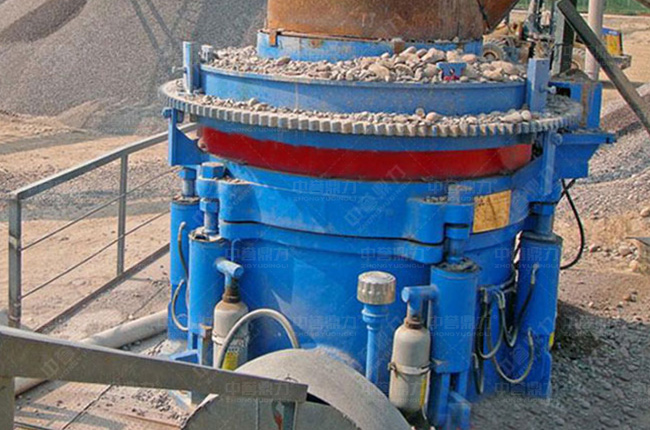
When it comes to crushing soft or weathered ore, the single-cylinder cone crusher excels, offering a throughput capacity that is 35%-60% higher than traditional cone crushers. This makes it particularly effective for certain mining operations.
For medium-hard to very hard ores, the multi-cylinder hydraulic cone crusher outperforms in terms of producing more qualified products. Its ability to handle tougher materials with greater efficiency makes it the preferred choice in such scenarios.
Ease of Maintenance: Its simpler structure means that the single-cylinder crusher is easier to maintain, with fewer moving parts and simpler hydraulics. This results in lower maintenance costs and shorter downtime.
Operational Simplicity: The straightforward design makes it easier for operators to manage, especially in operations where frequent adjustments are needed.
Maintenance Complexity: The more complex design of the multi-cylinder crusher requires more careful maintenance. The multiple hydraulic cylinders and the advanced control systems need regular monitoring and fine-tuning.
Operational Complexity: While offering higher performance, the multi-cylinder crusher's operation requires more expertise, particularly in fine-tuning the settings to optimize output and efficiency.
In the event of uncrushable material entering the crusher, hydraulic oil is pushed into the accumulator, causing the main shaft to drop and allowing the material to pass through. Afterward, the accumulator returns the oil, and the crusher resumes normal operation. The hydraulic pump also facilitates cavity clearing when necessary.
The multi-cylinder cone crusher features an automatic overload protection system. When uncrushable objects enter the crushing chamber or if the feed becomes excessive, the hydraulic system automatically adjusts the discharge port, allowing the material to exit. The discharge port resets automatically once the object has passed, ensuring smooth and continuous operation.
Energy Consumption: Typically, this model consumes less energy due to its simpler design and lower operational speeds, making it more energy-efficient for less demanding applications.
Cost-Effectiveness: With a lower upfront cost and simpler maintenance requirements, the single-cylinder crusher offers excellent value, particularly for small to medium-scale operations.
Energy Consumption: Although it consumes more energy due to its complex design and higher speed operations, the increased efficiency and output often justify the higher energy use.
Cost-Effectiveness: Despite higher initial costs and more complex maintenance, the multi-cylinder crusher's ability to produce finer, higher-quality aggregates often leads to better long-term returns, especially in demanding applications.
For secondary crushing operations, the single-cylinder hydraulic cone crusher is recommended due to its simplicity, efficiency, and high throughput for softer ores.
For fine crushing applications, the multi-cylinder hydraulic cone crusher is the better choice, offering superior performance in handling harder materials and producing finer, more uniform products.
In summary, as the hardness of the material being processed increases, the performance gap between single-cylinder and multi-cylinder hydraulic cone crushers becomes more evident. For medium-hard and hard materials, especially in fine crushing applications, the multi-cylinder hydraulic cone crusher is the superior choice, delivering higher efficiency, better product quality, and a greater volume of qualified fine material.
For operations focused on processing hard or abrasive ores, investing in a multi-cylinder hydraulic cone crusher will likely result in better long-term performance and higher productivity.
Are you still hesitating about how to choose a crushing equipment? Click the button below to learn more details
Chat Online
Free consultation on related issues.