 Sand Aggregate IndustryComprehensive Service ProviderSand Aggregate IndustryComprehensive Service Provider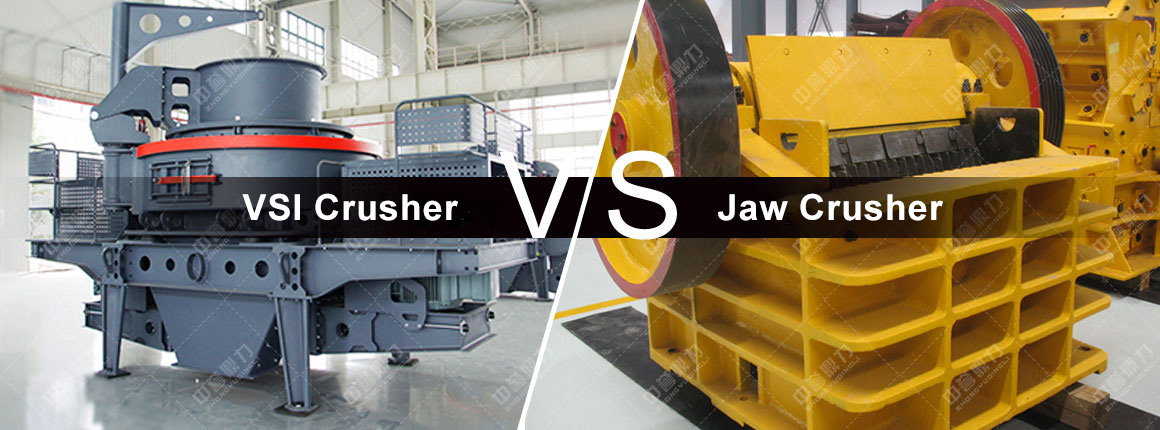
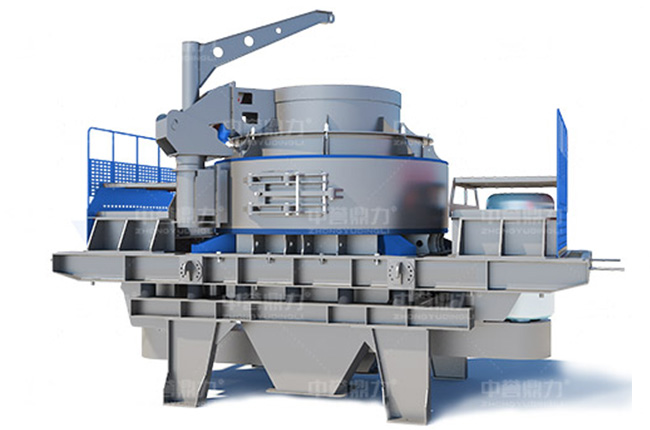
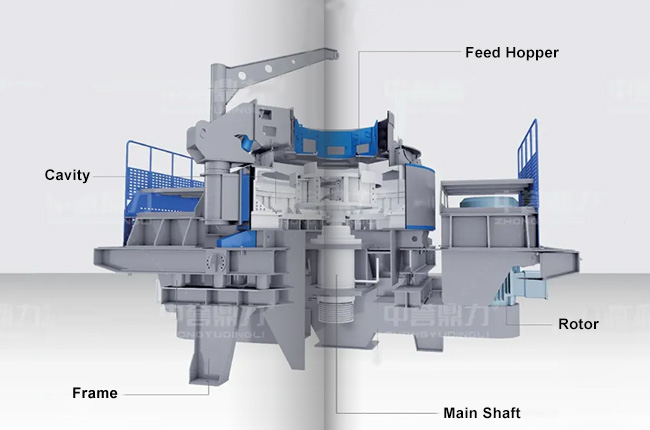
A VSI (Vertical Shaft Impact) crusher is designed to produce high-quality, cubical-shaped aggregate from various types of materials. Its main components include:
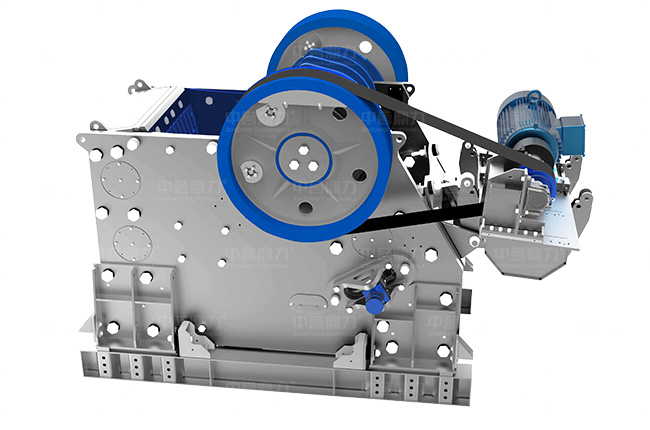
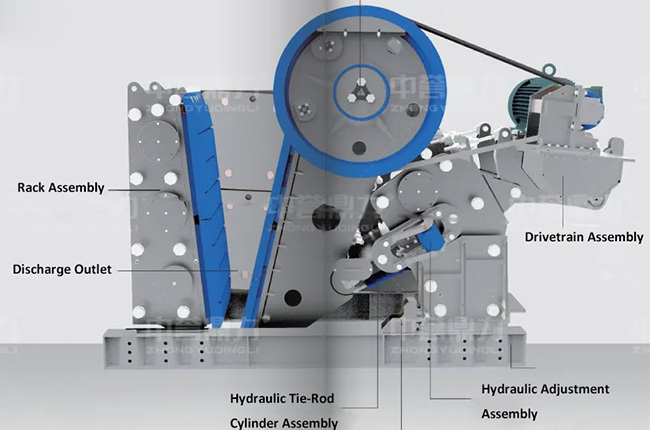
A jaw crusher primarily consists of:
Rotor: The central rotating element of the VSI crusher that accelerates the material to high speeds.
Impactor: Located around the rotor, it imparts high-velocity impact on the material.
Cavity: The area where the material is accelerated and impacted to break it into smaller pieces.
Feed Hopper: The entry point where the material is fed into the crusher.
Discharge Port: The exit point where the crushed material is ejected.
Frame: The structural support for all components, often made from robust steel.
Fixed Jaw Plate: A stationary component mounted on the machine frame, usually made of durable cast steel.
Movable Jaw Plate: A component that moves back and forth, connected to a hinge mechanism.
Jaw Plate Support: Structures that support and secure the jaw plates, ensuring stability and durability.
Eccentric Shaft: Transfers power to the movable jaw plate, typically driven by an electric motor.
Flywheel: Stores and releases energy to help reduce vibration.
Base and Frame: The support structure for the entire machine, bearing all working components.
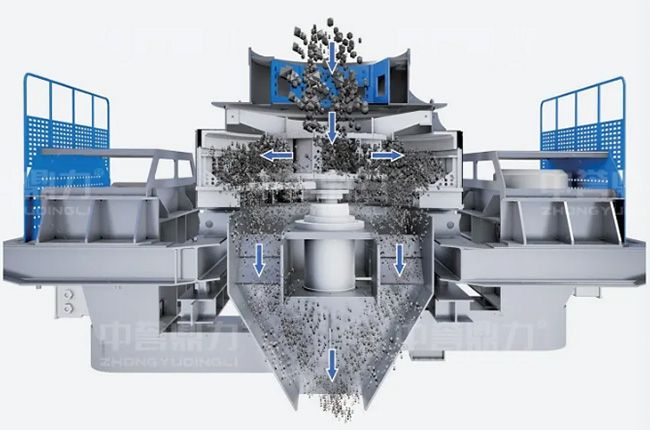
The VSI crusher operates on the principle of high-speed impact. The working process involves:
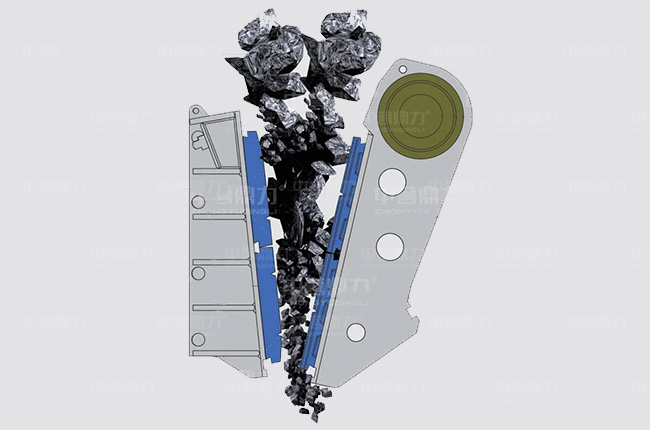
Jaw crushers operate based on compression and impact. The process includes:
Feeding: Material is fed into the rotor from the feed hopper.
Impact: The accelerated material is projected towards the impact plates or anvils where it is crushed by high-velocity impacts.
Feeding: Material enters the crusher through the feed opening.
Crushing: The movable jaw plate compresses the material between itself and the fixed jaw plate, breaking it down.
rushing Stage: Used primarily for shaping and fine crushing.
Applicable Material Hardness: Suitable for materials with high abrasiveness and hardness, including rocks and minerals with compressive strengths above 150 MPa.
Crushing Ratio: Typically around 4:1 to 8:1, depending on the material and application.
Feed Size: Maximum feed size generally ranges from 30 mm to 100 mm, depending on the model.
Output Size: Output sizes can be adjusted, usually ranging from 0.075 mm to 30 mm.
Output Particle Shape: Produces cubical or angular particles with consistent shape.
Production Capacity: Generally ranges from 30 t/h to 600 t/h, depending on the machine size and configuration.
rushing Stage: Primarily used for primary crushing.
Applicable Material Hardness: Suitable for materials with compressive strength between 150 to 300 MPa.
Crushing Ratio: Typically ranges from 6:1 to 10:1.
Feed Size: Maximum feed size ranges from 150 mm to 1500 mm.
Output Size: Discharge size is adjustable, generally from 10 mm to 300 mm.
Output Particle Shape: Typically irregular due to the compression mechanism; particles may be cuboidal, rectangular, or irregular.
Production Capacity: Generally ranges from 20 t/h to 1500 t/h.
High Cubical Shaped Product: Produces high-quality, cubical-shaped aggregate.
Versatility: Capable of processing a wide range of materials, including hard and abrasive types.
Efficient: High efficiency in reducing material size with low energy consumption.
Low Wear Costs: Reduced wear and tear due to the use of advanced materials and designs.
Simple Structure: Easy to manufacture and maintain, with low cost.
Ease of Operation: Simple and convenient to operate and adjust.
High Durability: Made from wear-resistant materials, leading to a long service life.
High Production Capacity: Suitable for crushing large blocks of material.
Initial Cost: Higher initial investment compared to some other crushers.
<Maintenance:Requires regular maintenance and replacement of wear parts.
Production Limits: May not be suitable for extremely large feed sizes.
High Energy Consumption: Can be energy-intensive, especially with hard materials.
Uneven Particle Size: Crushed material may be uneven in size.
Noise and Vibration: Generates significant noise and vibration during operation.
Construction Aggregates: Producing high-quality aggregates for construction projects.
Mining: Crushing and shaping ore for further processing.
Industrial Minerals: Processing industrial minerals like limestone and sandstone.
Recycling: Reprocessing demolition waste and concrete to produce recycled aggregates.
Mining: Crushing ores, coal, and other minerals.
Construction Materials: Producing aggregate for construction and processing demolition waste.
Chemical Industry: Primary crushing of raw chemical materials.
Metallurgy: Initial crushing of ores and smelting materials.
Regular Inspections: Frequent checks on rotor, impactor, and other wear parts.
Wear Parts Replacement: Timely replacement of wear components to ensure optimal performance.
Lubrication: Regular lubrication of moving parts to prevent damage.
Regular Checks: Inspect jaw plates, eccentric shaft, and other key components for wear.
Lubrication: Regularly lubricate moving parts.
Replacement: Replace worn jaw plates and other consumables as needed.
Initial Investment: Higher initial cost compared to some other types of crushers.
Operating Costs: Includes energy consumption and maintenance of wear parts.
Long-Term Use: Durable design leads to reduced operational costs over time due to efficient performance and lower wear.
Initial Investment: High purchase cost depending on the model and size.
Operating Costs: Includes energy consumption, maintenance, and repair.
Long-Term Use: Lower maintenance costs and long service life provide good long-term economic benefits.
Jaw crushers are essential for primary crushing in various industries, offering a range of technical parameters and operational features. Their simplicity, durability, and high production capacity make them a preferred choice, though considerations regarding energy consumption and maintenance should be factored into selection and use.
The VSI crusher is a versatile and efficient machine for producing high-quality, cubical-shaped aggregate from various materials. With its ability to handle hard and abrasive materials, it is widely used in construction, mining, and recycling industries. While it requires a higher initial investment and regular maintenance, its advantages in product quality and efficiency make it a valuable asset for many crushing operations.
Are you still hesitating about how to choose a crushing equipment? Click the button below to learn more details
Chat Online
Free consultation on related issues.