 Sand Aggregate IndustryComprehensive Service ProviderSand Aggregate IndustryComprehensive Service Provider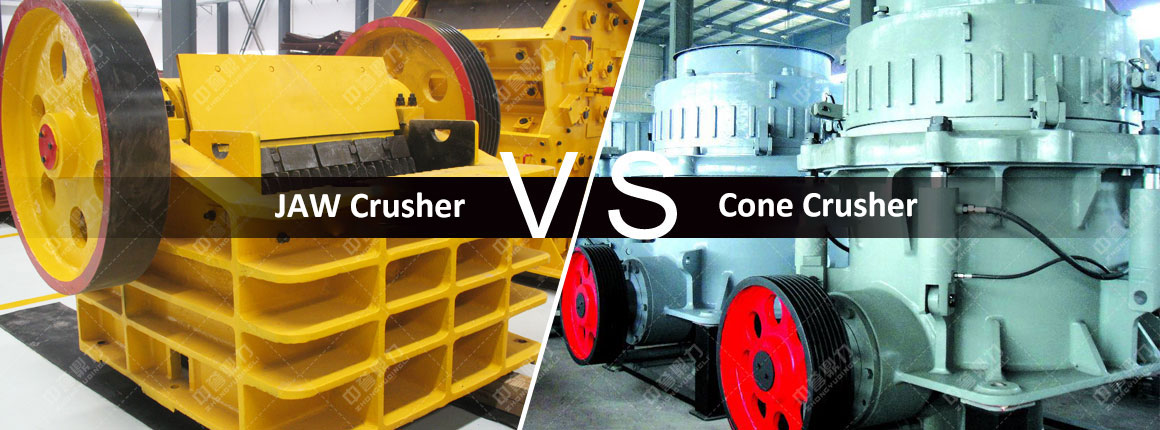
The cone crusher and jaw crusher both utilize the laminated crushing principle, commonly known as the extrusion crushing principle. While the crushing structures differ, the nature of the crushing process remains largely the same.
The cone crusher employs the extrusion process between the grinding wall and the crushing wall, whereas the jaw crusher uses the extrusion process between the moving jaw plate and the static jaw plate.
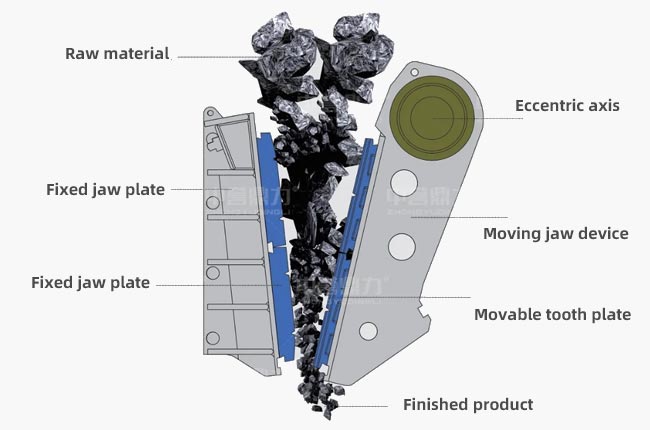
Jaw crusher working principle
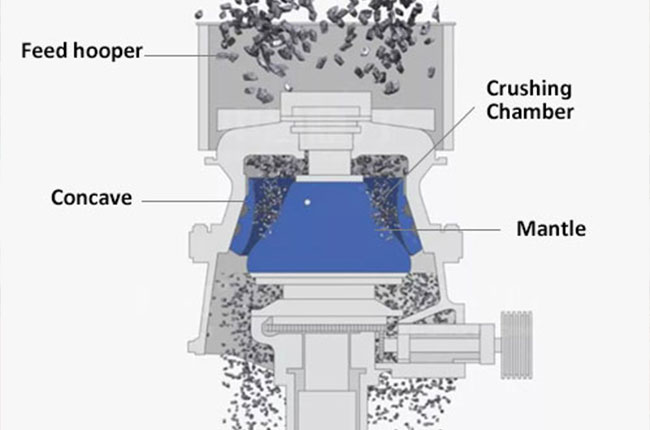
Cone crusher working principle
| Jaw Crusher | Cone Crusher | |
| Compressive strength of materials | ≤350 MPa | ≤300 MPa |
| Applicable Materials | Suitable for a variety of materials with different hardness, such as limestone, chalcocite, hematite, pebble, granite, etc. | More suitable for hard rocks and ores, such as iron ore, granite, pebble. Not suitable for crushing viscous materials that contain a lot of moisture |
| Crushing stage | Primary crushing | Secondary or tertiary crushing |
| Feed size | Generally 120mm to 1500mm | Generally 65mm to 300mm |
| Discharge Size | 10mm to 350mm | 3mm to 60mm |
| Reduction ratio | 6:1 | 5:1 |
| Grain shape | Relatively uniform, often angular | More regular, cubic shape |
Large feed opening: Capable of handling large raw materials, suitable for primary crushing.
High crushing ratio: Can crush large chunks of material into smaller sizes in one go.
Simple structure: Easy to maintain and operate, relatively easy to replace wear parts.
Wear resistance: Jaw plates are usually made of wear-resistant materials, capable of withstanding large impacts and wear.
Relatively lower crushing efficiency: Compared to other types of crushers, Jaw Crusher may not have the highest crushing efficiency.
Uneven product granularity: The particle size distribution of crushed materials may be wider, less uniform compared to Cone Crusher.
Not suitable for high hardness materials: While capable of handling certain hardness materials, the maintenance and wear costs can be high for extremely hard materials.
Efficient crushing: Suitable for medium and fine crushing, capable of handling materials with higher hardness.
Uniform product granularity: Crushed materials have more uniform particle size distribution, fewer flaky products.
High production capacity: Can process more materials per unit time, high production efficiency.
Automatic protection function: Some models have overload protection to prevent equipment damage.
Complex structure: High manufacturing cost, equipment prices are generally higher compared to Jaw Crusher.
High maintenance cost: Inspection and maintenance are relatively complex, requiring specialized personnel and skills.
Not suitable for sticky materials: Requires certain humidity and viscosity of materials, not suitable for processing wet and highly sticky materials.
High investment cost: Equipment itself and related construction costs may be higher.
In summary, both jaw crushers and cone crushers have their unique advantages and application scopes. Jaw crushers, with their large feed openings, high crushing ratios, and simple structures, are particularly suited for primary crushing and handling materials of various hardness levels. Cone crushers, on the other hand, excel in efficient crushing, producing uniformly sized particles, and achieving high output volumes, making them stand out in secondary and tertiary crushing stages as well as in processing harder materials.
However, each type of equipment has its limitations; jaw crushers may experience higher wear when dealing with extremely hard materials, while cone crushers perform less optimally with sticky or wet materials. Selecting the appropriate crushing equipment requires comprehensive consideration of specific production requirements, material characteristics, and economic budgets.
We hope that through this comparative analysis, we have provided valuable references for you in choosing the right crushing equipment for your needs. When making a decision, it's crucial to consider all factors including the nature of the material being processed, the desired end product, and the overall operational costs associated with maintenance and operation.
Are you still hesitating about how to choose a crushing equipment? Click the button below to learn more details
Chat Online
Free consultation on related issues.