 Sand Aggregate IndustryComprehensive Service ProviderSand Aggregate IndustryComprehensive Service Provider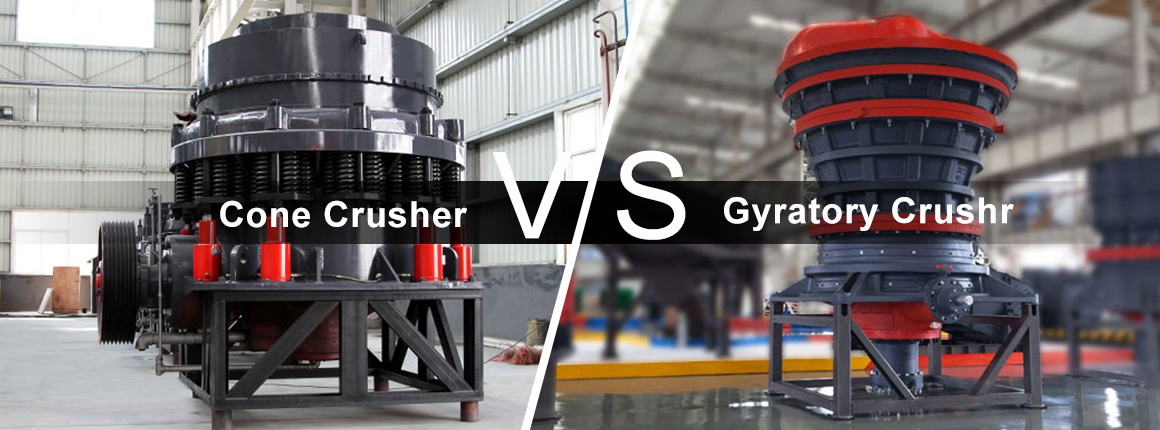
In the world of rock crushing, selecting the right equipment can make or break a project's success. Gyratory crushers and cone crushers stand out as two powerhouse machines, each with its own strengths and capabilities. These crushers play a crucial role in reducing large rocks into smaller, more manageable pieces for various industries, including mining, construction, and aggregate production.
When it comes to choosing between a gyratory crusher and a cone crusher, several factors come into play. This article aims to shed light on the crushing principles, performance factors, and operational considerations of both types. By examining their feed size capabilities, product shape outcomes, maintenance requirements, and overall costs, readers will gain valuable insights to help them make an informed decision for their specific crushing needs.
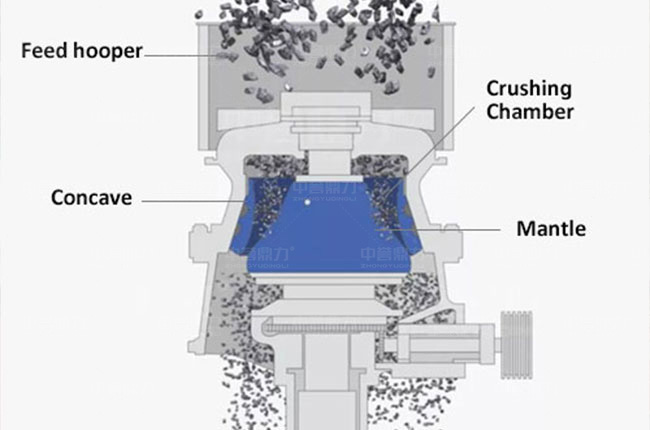
Cone Crushers have both cones as gently inclined upright truncated cones. The lower part of the crushing chamber includes a parallel crushing zone.
Conical shape with a rotating mantle inside a bowl-shaped cavity.
Eccentric motion of the mantle.
Parallel crushing chamber between two gently inclined cones.
Movable cone supported on spherical bearings.
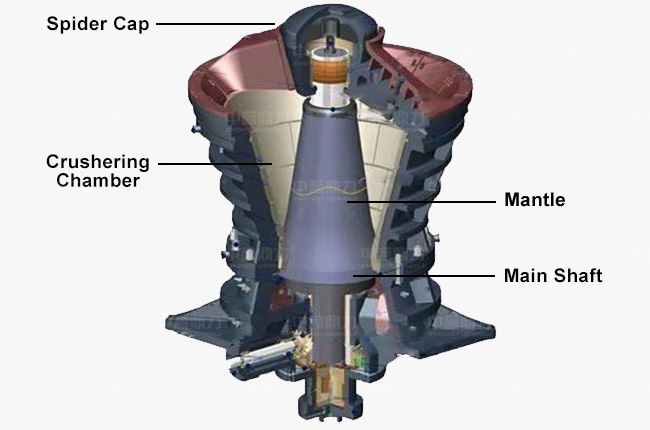
Gyratory Crushers feature a design where both cones have steeply inclined angles.
The moving cone is upright while the fixed cone is inverted.
This arrangement allows materials to flow vertically downward due to gravity, enhancing throughput and productivity.
Central vertical shaft with a mantle liner.
Elliptical motion due to eccentric bushing rotation.
Cone Crushers use spherical bearings to support the moving cone, which can offer better movement patterns and improve crushing efficiency.
Gyratory Crushers have the moving cone suspended from the crossbeam of the frame, providing stability and reliability.
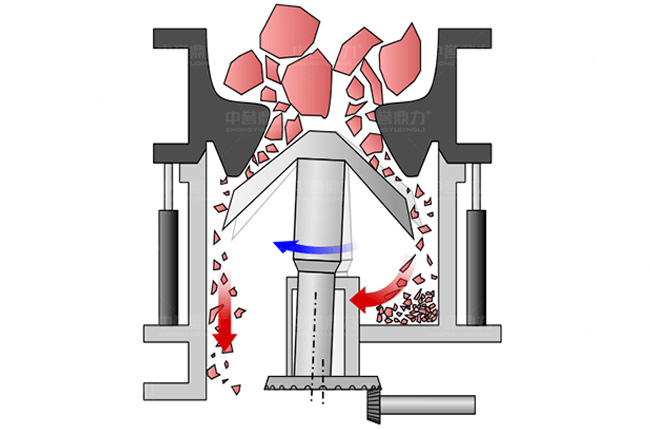
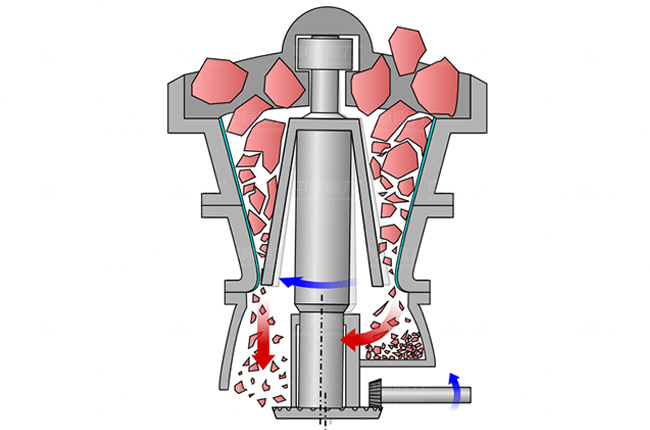
Cone Crushers (including spring cone crushers and multi-cylinder hydraulic cone crushers) control the discharge size by adjusting the height of the fixed cone, offering greater operational flexibility.
Gyratory Crushers adjust the discharge opening by raising or lowering the moving cone, a straightforward method.
| Cone Crusher | Gyratory Crusher | |
| Feed Size | Handles materials up to 450mm in size. | Can handle larger feed sizes (up to 1300mm). |
| Output Size | Can produce finer outputs with reduction ratios ranging from 3:1 to 6:1. | Typically reduces material to about 1/10 of its original size. |
| Materials | Harder materials | Moderate hardness |
| Application | Secondary and tertiary crushing | Primarily used for coarse crushing |
A gyratory crusher is designed to handle larger feed sizes compared to a cone crusher. This means it can accept larger pieces of rock and ore, which can help to reduce the need for multiple crushers in a crushing circuit. However, a cone crusher is commonly used for secondary or tertiary crushing purposes, and it can be a more economical choice when the size of the materials being processed is smaller.
Another factor to consider is the shape of the final product. A gyratory crusher tends to produce a more cubical end product compared to a cone crusher, which typically produces flatter and more elongated particles. This can be advantageous if you are producing aggregates for use in concrete or asphalt, as a cubical product can provide better strength and durability. On the other hand, if you are producing sand or fine aggregates, a cone crusher may be a better choice as it can produce more consistent and uniform particles.
Daily oil cleanliness checks are essential, with bearing lubrication every 500 hours.
Oil changes every 6,000 hours.
Regular application of crusher backing protects components and fills gaps.
The main frame should be checked for damage, using a micrometer for vaqriance and quality control. Daily alarm checks ensure proper functioning.
Checking spider bushing clearance monthly or every 500 hours, whichever comes first.
Balance cylinders should be inspected every 30 days of operation.
Oil and lubrication cleanliness checks are necessary every 8 hours.
Every 40 hours, operators should check for leaks and inspect Y strainers.
Monthly safety device inspections and oil analysis are recommended, with a complete oil change annually or every 2,000 hours.
While both crusher types require diligent maintenance, gyratory crushers generally have higher repair costs due to their complex structure. However, they offer advantages like higher productivity and lower power consumption.
Cone crushers, with their simpler design, may have lower maintenance costs but require more frequent adjustments.
The choice between the two often depends on specific operational needs and long-term cost considerations. Regular maintenance for both types is crucial for extending service life, reducing downtime, and optimizing operational efficiency.
The choice between gyratory and cone crushers has a significant impact on project outcomes in rock crushing operations. Each type offers unique advantages, with gyratory crushers excelling in handling large feed sizes and high throughput rates, while cone crushers shine in producing finer, more uniform outputs. The decision to use one over the other depends on specific project requirements, including the desired product size, shape, and overall operational efficiency.
Ultimately, the success of a crushing project hinges on careful consideration of performance factors, maintenance needs, and long-term costs. By weighing these aspects against project goals, operators can make an informed decision that optimizes their crushing operations. Whether opting for a gyratory or cone crusher, proper maintenance and integration within the overall plant design are key to achieving consistent product quality and maximizing operational efficiency.
A gyratory crusher offers several advantages including a deep crushing chamber, high production capacity, and efficient processing volume with low power consumption. Compared to jaw crushers, another type of coarse crushing equipment, gyratory crushers can achieve more than double the production capacity
For crushing hard rock in quarries, a jaw crusher is highly recommended as the primary crusher to reduce rock to about 3-4 inches. Following this, a cone crusher should be used as the secondary crusher to further reduce the rock to the desired size.
Gyratory crushers are generally used for crushing larger rocks and are capable of handling larger feed sizes, providing greater throughput compared to cone crushers. On the other hand, cone crushers are more suitable for processing smaller rocks.
Are you still hesitating about how to choose a crushing equipment? Click the button below to learn more details
Chat Online
Free consultation on related issues.