 Sand Aggregate IndustryComprehensive Service ProviderSand Aggregate IndustryComprehensive Service Provider
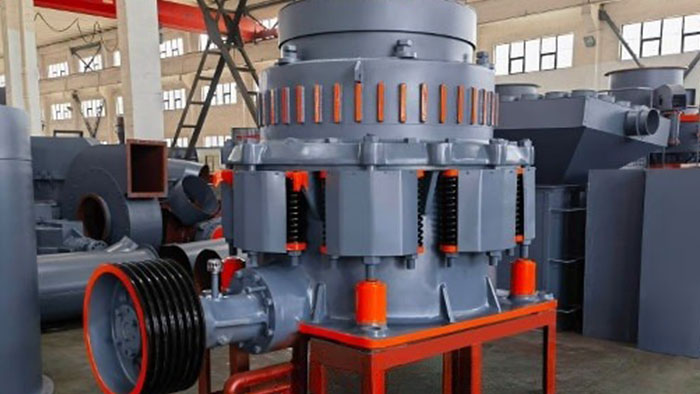
Cone Crusher
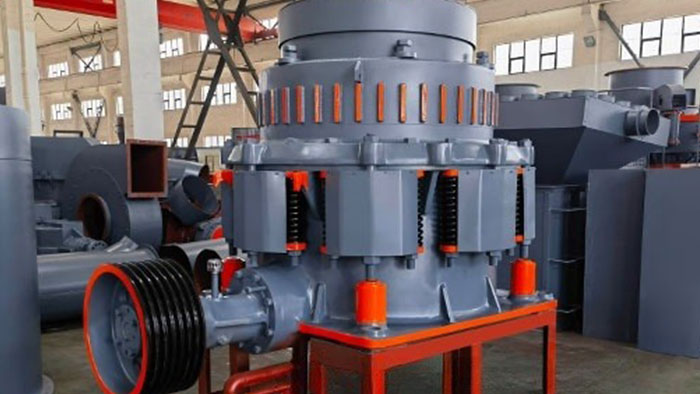
| Model | PYF1400 | |||
| Cavity Type | C | M | F | EF |
| Maximum feed size (mm) | 215 | 160 | 115 | 76 |
| Discharge opening adjustment range (mm) | 19-51 | 16-25 | 13-22 | 10-19 |
| Processing Capacity (t/h) | 200-440 | 155-230 | 150-230 | 122-200 |
| Motor power (kw) | 200-220 | |||
| Machine weight (t) | 26.3 | |||
*Note: The processing capacity of the PYF1400 cone crusher may vary with different materials and feeding sizes.
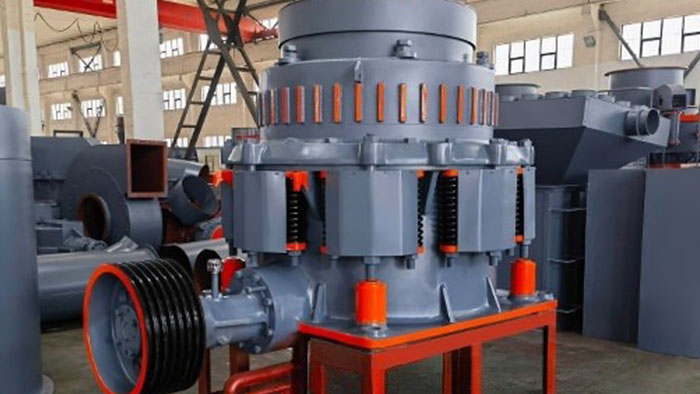
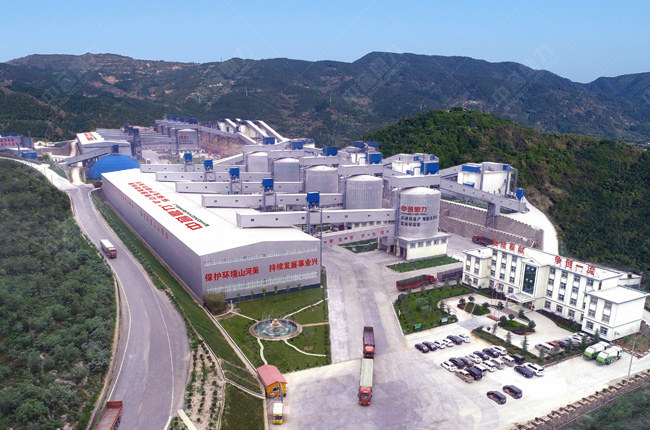
At present, the highest configuration in the industry, when the output reached 3000 tons, is the highest configuration of the production line in the industry, less power consumption, the production of sand and stone aggregate particle shape, particle size, grading, stone powder content can be adjusted and controlled, the proportion of fine stone accounted for more than 2/3.
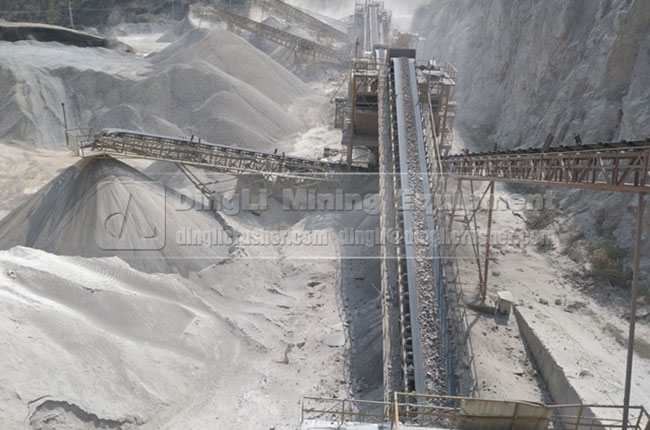
It’s seen the gravel aggregate production line has large scale which can meet the customer requirement for large capacity. The dust collectors will be configured later for environment protection.
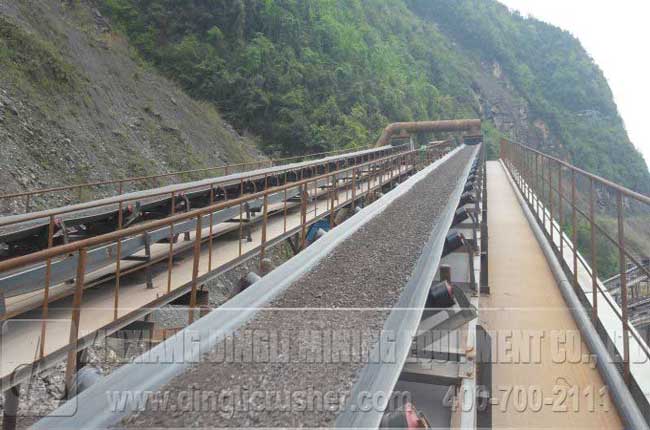
From this site we get to know this production line builds with mountain that can make fully use of limestone. All the machines are installed and provided by Xinxiang Dingli with high matching.
The PYF1400 cone crusher is a high - capacity and versatile equipment that is integral to many industrial crushing processes. To fully utilize its capabilities and integrate it effectively into a production line, it's crucial to understand its working principle and how it can be adapted to different production setups.
The PYF1400 cone crusher operates based on the principle of compression. As the material enters the crusher through the feed opening, it drops into the crushing chamber. Inside this chamber, a mantle rotates eccentrically within a concave liner.
The eccentric motion of the mantle causes it to approach and move away from the concave liner. When the mantle moves towards the liner, the material caught between them is subjected to a powerful compressive force. This force squeezes and breaks the material into smaller pieces. The process is repeated continuously as the mantle rotates, gradually reducing the size of the material until it reaches the desired size range determined by the discharge opening adjustment.
The different cavity types - C, M, F, and EF - each have their own specific maximum feed sizes and discharge opening adjustment ranges. For example, the C cavity with a maximum feed size of 215 mm and a discharge opening adjustment range of 19 - 51 mm is designed to handle larger feedstock and produce a relatively coarser output compared to the other cavities. In contrast, the EF cavity with a maximum feed size of 76 mm and a discharge opening adjustment range of 10 - 19 mm is more focused on finer crushing. These different cavity settings allow the PYF1400 to be highly adaptable to various crushing requirements.
The feeding system for the PYF1400 must be carefully selected to match the crusher's capabilities. Given the different maximum feed sizes of its cavity types, the feeder should be able to handle the largest possible feed size. For the C cavity, a robust vibrating feeder with a high - capacity hopper and adjustable feed rate is required to ensure a steady supply of materials up to 215 mm. This feeder needs to be synchronized with the crusher's processing capacity, which for the C cavity is 200 - 440 tons per hour. Similar considerations apply to the other cavities, with the feeder's specifications adjusted according to their respective maximum feed sizes and processing capacities.
After crushing, the output from the PYF1400 needs to be efficiently transported to the next stage of the production process. The conveyor belt's width and speed should be designed to handle the volume and size of the crushed material. For example, when the crusher is operating at the higher end of its processing capacity, especially for the C and M cavities, a wider and faster - moving conveyor belt is necessary to prevent bottlenecks. The conveyor should also have an appropriate discharge height and angle to ensure a smooth transfer of materials to subsequent equipment such as screening machines or storage areas.
To obtain the desired final product sizes, the PYF1400 needs to be integrated with screening and sorting equipment. The discharge opening adjustment ranges of the different cavities play a crucial role in this integration. The mesh sizes of the screening machines should be selected to match the possible output sizes from the crusher. For instance, for the F cavity with a discharge opening adjustment range of 13 - 22 mm, the screening machine's mesh sizes should be chosen to separate the crushed material into the appropriate size fractions. This way, the crusher and the screening equipment work together to produce a consistent and high - quality end product.
Understanding the working principle of the PYF1400 cone crusher and its integration into a production line is essential for maximizing its efficiency and productivity. By carefully considering these aspects, operators can ensure that the crusher functions optimally and contributes effectively to the overall production process.
We are present worldwide and always here to help.
Get in touch today!