 Sand Aggregate IndustryComprehensive Service ProviderSand Aggregate IndustryComprehensive Service Provider
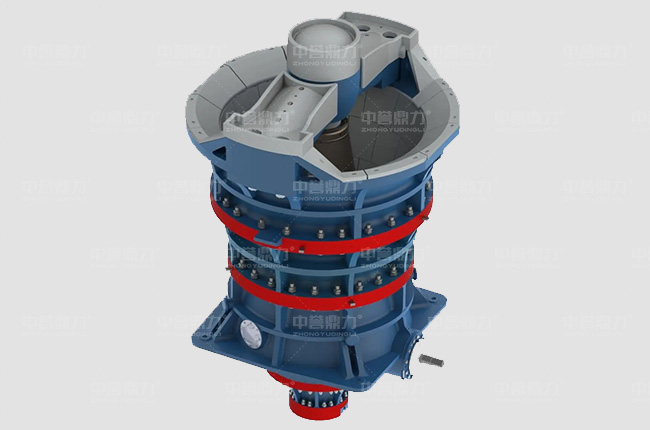
Features a main shaft with a crushing cone supported at the top by a bearing within the crossbeam and at the bottom by an eccentric bushing. The cone performs an eccentric rotational movement.
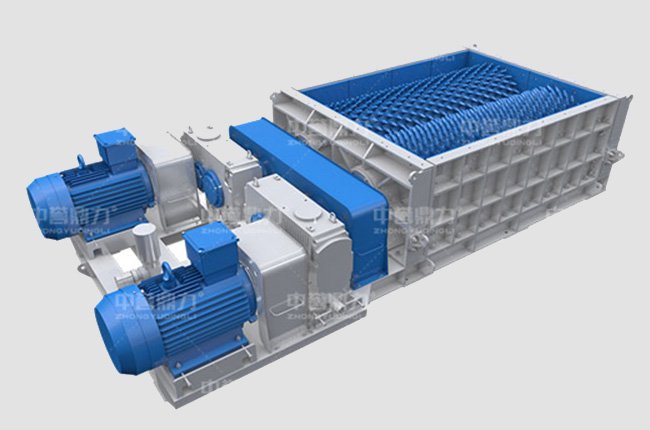
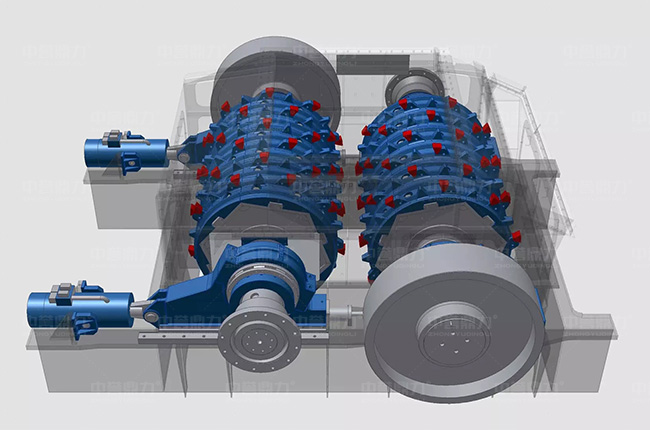
Consists of two parallel rollers with a gap between them. The rollers can be smooth or have various surface profiles.
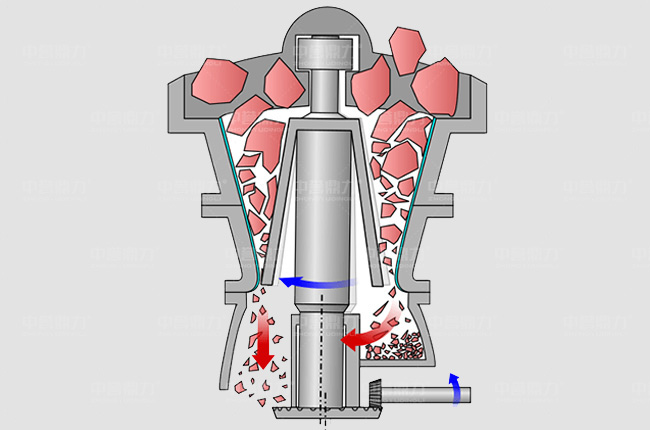
The crushing cone rotates around the central axis in an eccentric motion, leading to continuous layer-by-layer crushing of material between the moving and fixed cones. This results in high efficiency and uniform product size.
Material is fed between the rotating rollers and is crushed by the compressive force exerted by the rollers. The crushing process is continuous, with material passing through the gap between the rollers.
Processing Capacity: Known for high-efficiency crushing with capacities ranging from 2800 to 3200 tons per hour, handling large volumes of material effectively.
Feed Size: Large feed openings, typically from 900mm to 1524mm. Suitable for processing large-sized raw materials.
Processing Capacity: Typically handles smaller capacities compared to gyratory crushers, with ranges often between 10 to 500 tons per hour depending on the model.
Feed Size: Smaller feed size compared to gyratory crushers. Feed sizes are generally up to 200mm, depending on roller diameter and spacing.
Dust Control: Better sealing and dust control, resulting in a cleaner working environment with less dust leakage.
Operating Environment: Suitable for environments requiring minimal dust pollution.
Dust Control: Dust control can be less effective; additional dust suppression measures may be required.
Operating Environment: More prone to dust generation, may require extra measures to manage dust.
Discharge Size: Typically produces a discharge size ranging from 140mm to 250mm.
Particle Shape: Produces more uniform particles with fewer needle-like shapes, generally less than 10% needle-like particles. The product has a more consistent size distribution.
Discharge Size: Provides a discharge size that can be adjusted but generally ranges from 1mm to 100mm.
Particle Shape: Can produce finer particles with a more consistent shape. However, depending on the roller profile, the shape might be less uniform compared to gyratory crushers.
Wear Parts: Includes the moving cone liner, fixed cone liner, and eccentric bushing. Wear is relatively even but can be costly to replace.
Maintenance: More complex structure leading to higher maintenance costs and more challenging repairs, but wear parts generally have a longer lifespan.
Wear Parts: Includes the rollers and potentially the crushing plates. Wear is focused on the roller surfaces.
Maintenance: Generally easier and less expensive to maintain compared to gyratory crushers, with simpler replacement of roller surfaces.
Energy Consumption: More energy-efficient compared to roll crushers, especially for large-scale operations. Lower energy consumption relative to its processing capacity.
Efficiency: High efficiency due to continuous crushing and large processing capacity.
Energy Consumption: Typically consumes more energy per ton of processed material compared to gyratory crushers, particularly when handling larger or harder materials.
Efficiency: Efficient for smaller-scale processing but less effective in handling large volumes compared to gyratory crushers.
Applications: Ideal for large-scale mining and aggregate operations requiring high throughput and handling of hard materials. Suitable for primary and secondary crushing stages.
Applications: Best suited for smaller-scale operations or secondary and tertiary crushing stages. Effective for materials requiring finer crushing and for processing softer or medium-hard materials.
Economic Factors: Higher initial investment and operational costs but offers high efficiency and lower cost per ton processed. Suitable for high-capacity and high-efficiency needs.
Facility and Infrastructure: Requires significant infrastructure and space due to its large size and complex structure.
Economic Factors: Lower initial investment and operating costs. Suitable for lower capacity requirements and budget-conscious operations.
Facility and Infrastructure: Requires less space and simpler infrastructure, making it a cost-effective choice for smaller operations.
High-Capacity Crushing: For large-scale operations requiring high throughput and efficient processing of hard materials, a gyratory crusher is the better choice. Its high capacity and continuous crushing capability make it suitable for large production environments.
Finer Crushing and Budget Constraints: For smaller-scale operations or applications needing finer material and where budget constraints are a concern, a roll crusher is more appropriate. It offers a lower initial investment and is effective for secondary and tertiary crushing stages.
Overall Consideration: If high throughput and processing efficiency are the primary needs, especially in large operations, a gyratory crusher is the preferred option. For operations with lower capacity requirements or tighter budgets, a roll crusher can be a more economical and effective choice. In some cases, combining both types of crushers can optimize the production process by leveraging their respective strengths.
Are you still hesitating about how to choose a crushing equipment? Click the button below to learn more details
Chat Online
Free consultation on related issues.