 Sand Aggregate IndustryComprehensive Service ProviderSand Aggregate IndustryComprehensive Service Provider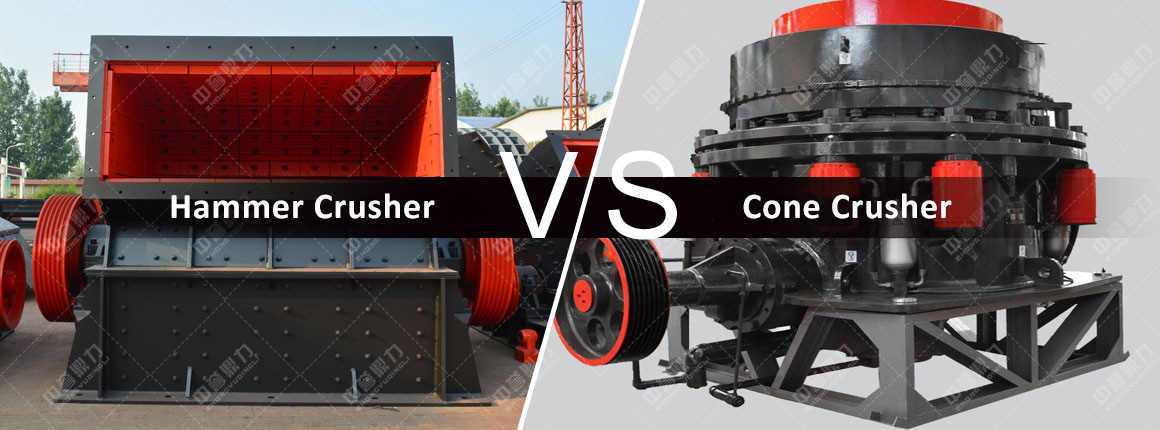
Crushing equipment is essential in industries like mining, construction, and manufacturing. Cone crushers and hammer crushers are two common types, each offering unique advantages and applications. This article delves into their specifics, comparing performance, and exploring the latest advancements in hammer crusher technology.
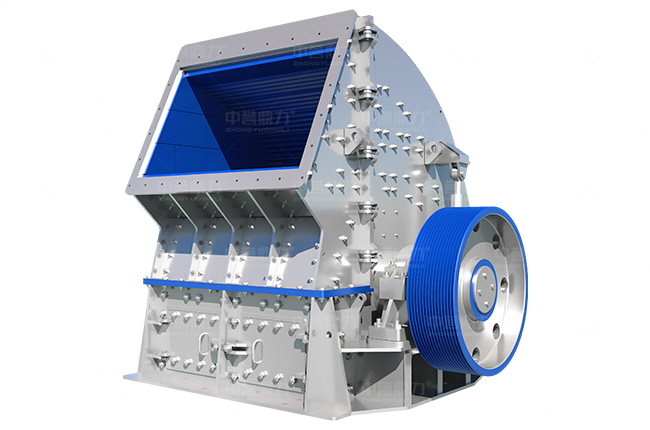
Capable of one-pass shaping without the need for secondary crushing, ideal for small to medium-sized operation
Cost-effective and adaptable for various feed sizes.
More suitable for scenarios where particle shape requirements are not stringent.
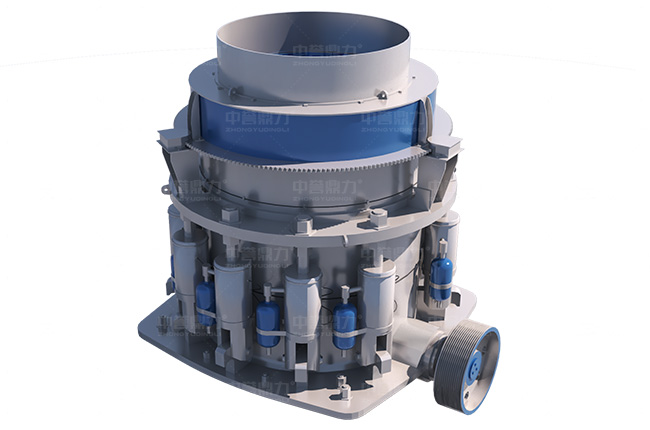
Typically serve as second or third stage crushers in mining production lines.
Offers high crushing efficiency and output, suitable for high-quality aggregate production.
Ideal for applications requiring precise control over particle size distribution.
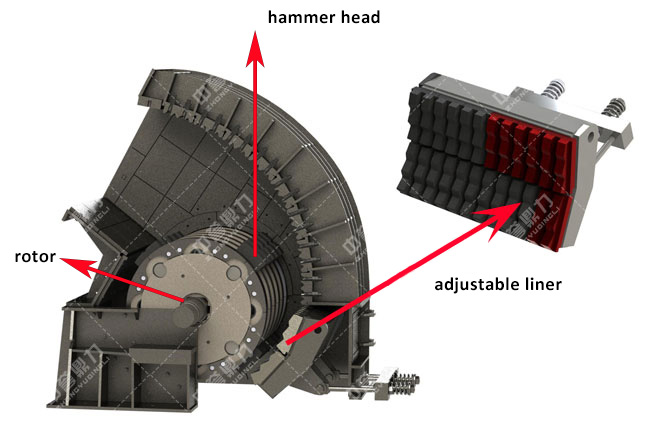
Structural Features: Composed of rotor, hammers, and screen plates.
Screen plates control the discharge size for uniform output.
Impact Crushing: High-impact force for rapid size reduction.
Simple Structure: Easy maintenance and operation.
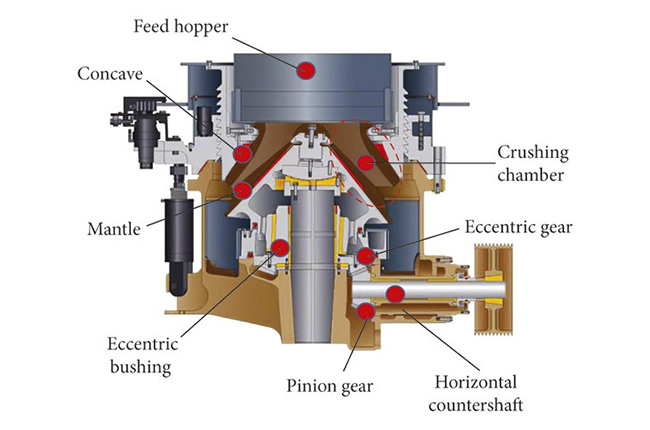
Structural Features:Hydraulically adjustable gap between the moving and fixed cones.
Layer Crushing: Efficiently crushes material by layers, resulting in high-quality output.
Adjustable Discharge Opening: Enables customization of the final product size.
Stable Operation: Robust and compact design for stable operation.
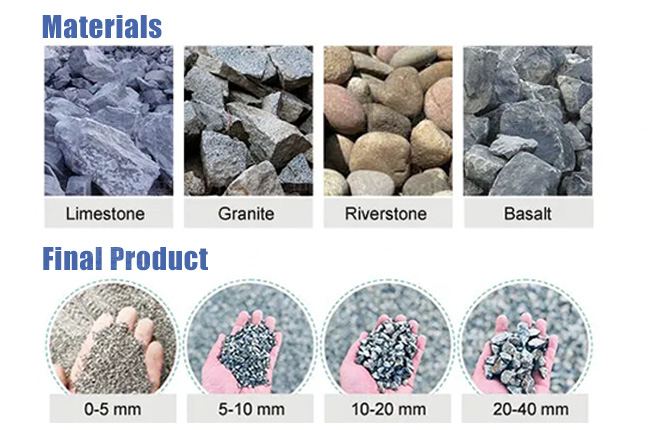
Feed Size: Can accommodate larger feed sizes up to 1200mm.
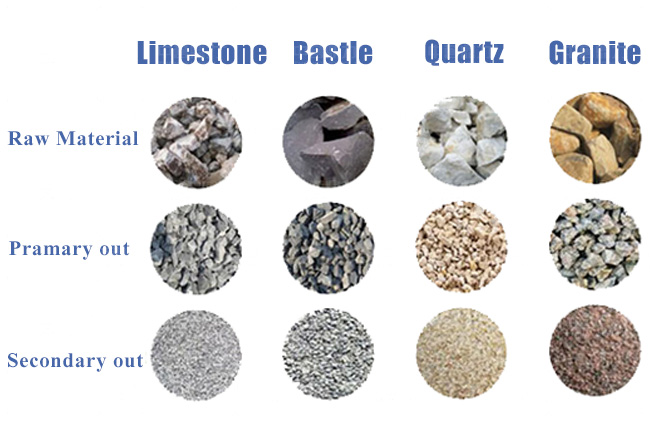
Discharge Size:Produces adjustable coarse or fine outputs, including sand less than 5mm.
Soft to Medium-Hard Materials: Ideal for processing limestone, coal, and other softer materials.
Primary Crushing: Effective at breaking down large blocks into manageable pieces.
Secondary Crushing: Handles secondary crushing tasks for softer materials.
Feed Size: Typically less than 300mm.
Discharge Size:Produces finer products, typically 10-50mm stone specifications.
Quality of Output: The particle shape is usually more cubic and uniform.
Hard Rock Crushing: Suitable for processing hard and abrasive materials like granite and basalt.
Secondary Crushing: Often used after primary jaw crushers for finer size reduction.
Tertiary Crushing: Produces very fine material for specific applications.
In essence, there are no good or bad crushers, it depends on the specific application and user needs. Each user's investment costs and production standards differ, hence their choices will vary. Here are two specific cases:
Output: 250-300T/H
Raw Material: Limestone
Material Hardness: Soft
Feed Size: ≦900mm
Production Line Type: Fixed
Number of Finished Products: 4
Finished Product Specifications: 0-5mm, 5-10mm, 10-20mm, 20-30mm
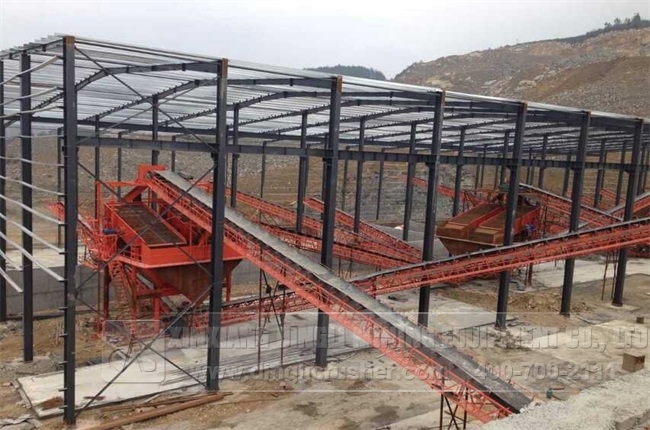
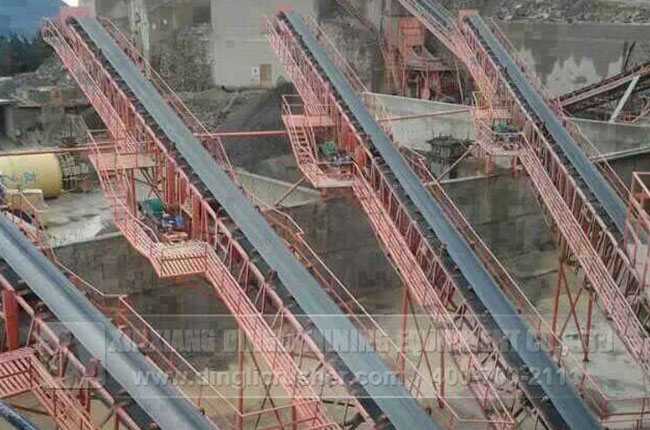
Configuration Equipment: Vibrating feeder, heavy hammer crusher, vibrating screen, belt conveyor
Case Features: This configuration is very representative, with the heavy hammer crusher replacing the traditional jaw crusher + impact crusher configuration. It simplifies the process, reduces operational costs, and meets the user's expected production requirements.
Output: 250-300T/H
Raw Material: Granite
Material Hardness: Hard
Feed Size: ≤630mm
Production Line Type: Fixed
Number of Finished Products: 4
Finished Product Specifications: 0-5mm, 5-10mm, 10-20mm, 20-40mm
Configuration Equipment: Vibrating feeder, jaw crusher, cone crusher, vibrating screen, belt conveyor, etc.
Case Features: This configuration is suitable for high-hardness materials. The cone crusher enables efficient crushing with uniform particle size, stable operation of the entire production line, and is ideal for users requiring high-quality finished products.
When the output is similar (250-300T/H), the choice of equipment primarily depends on the hardness of the material and the specific needs of the user:
Processing Soft Material: The hammer crusher is a better choice. Its advantages include simple equipment configuration, simplified operation process, and reduced production costs. For example, when processing limestone, the heavy hammer crusher can achieve one-time forming, significantly reducing equipment investment and maintenance costs.
Processing Hard Material: The cone crusher is more suitable. Its main advantages are its ability to handle high-hardness materials, high-quality finished products with uniform particle size, making it suitable for production lines that require high-quality finished products.
Hammer crushers and cone crushers are both well-established options in the realm of aggregate crushing, each with unique benefits. This article delves into six key aspects to distinguish between these two crusher types, offering valuable insights for decision-making.
When discussing hammer crushers, we often refer to traditional models. Despite the prevalence of more advanced equipment, small to medium-sized production lines in various regions still favor hammer crushers due to their high crushing ratio and cost-effectiveness.
Nevertheless, manufacturers such as ZhongYuDingLi have introduced significant improvements to the conventional hammer crusher design. Innovations like the heavy hammer crusher now encompass functions such as primary crushing, fine crushing, and sand-making. These upgraded models deliver enhanced performance but come with a higher price tag.
Are you still hesitating about how to choose a crushing equipment? Click the button below to learn more details
Chat Online
Free consultation on related issues.